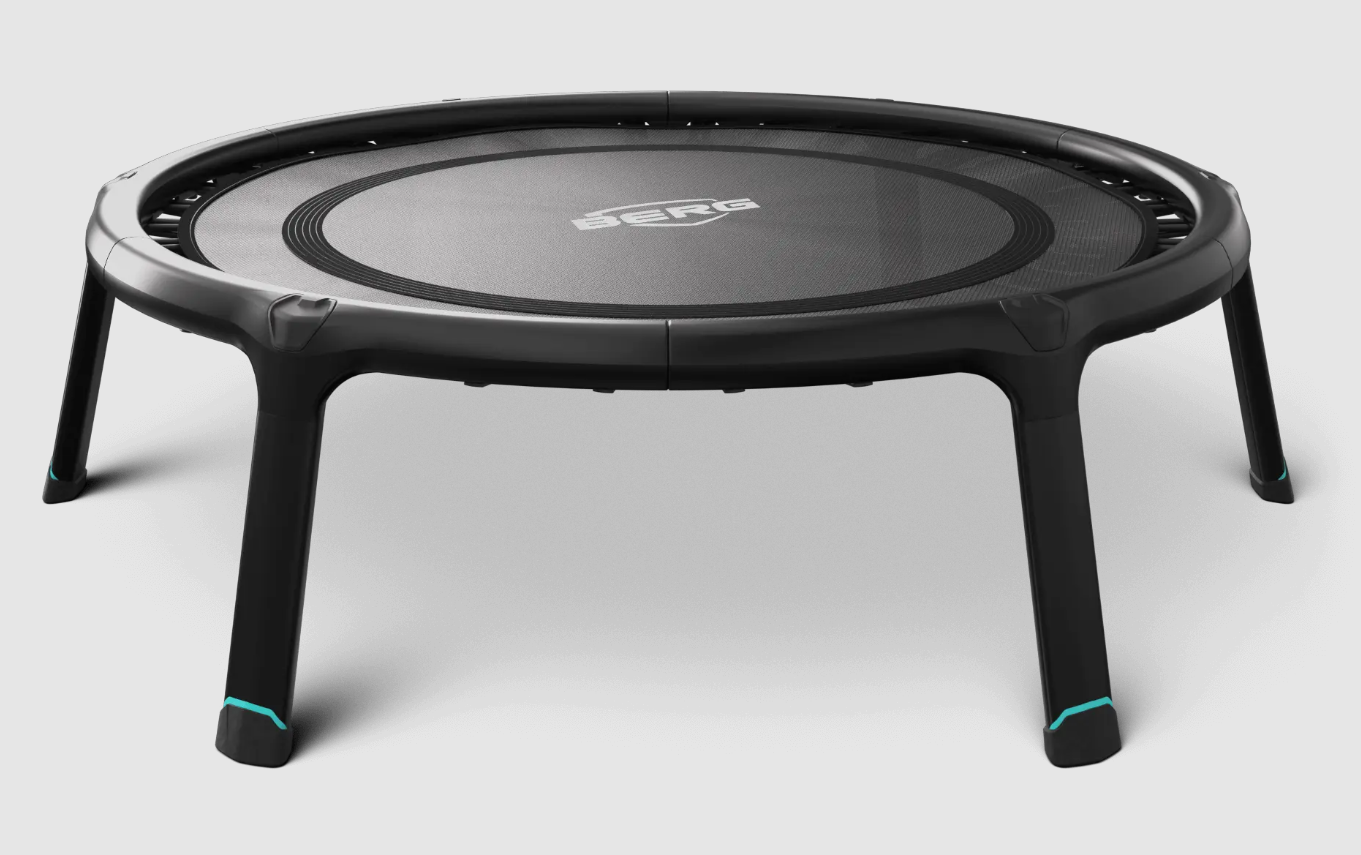
Without handlebar
BERG Fitness Trampoline 110 Black
Quiet, foldable, elastic-band rebounder
- 36 elastic bands — no metal springs
- Foldable legs
- Up to 120 kg (approx. 19 st)
- 3-year home warranty
See today's price
Buy nowBERG rebounders delivered across the UK · £11.99 tracked delivery · 3-year warranty
Move more, expect realistically
Rebounding is exercise on a small fitness trampoline. Rather than aiming for height, most home routines use small, controlled movements: a gentle bounce, marching, easy jogging or a simple change of foot position. The appeal is straightforward. You can move indoors, adapt the pace to how you feel and build a session around the time and space available.
The benefits of rebounding are best understood as the possible benefits of regular physical activity, together with the practical advantages of equipment you enjoy using. A rebounder is not a shortcut to a particular body shape, a medical treatment or a guarantee of fitness. The amount of work you do, your starting point, technique and consistency all matter.
This guide separates useful training opportunities from exaggerated claims. If you are choosing equipment, start with our rebounders overview. If you already have a suitable setup, the beginner’s guide to rebounding explains how to make those first sessions manageable.
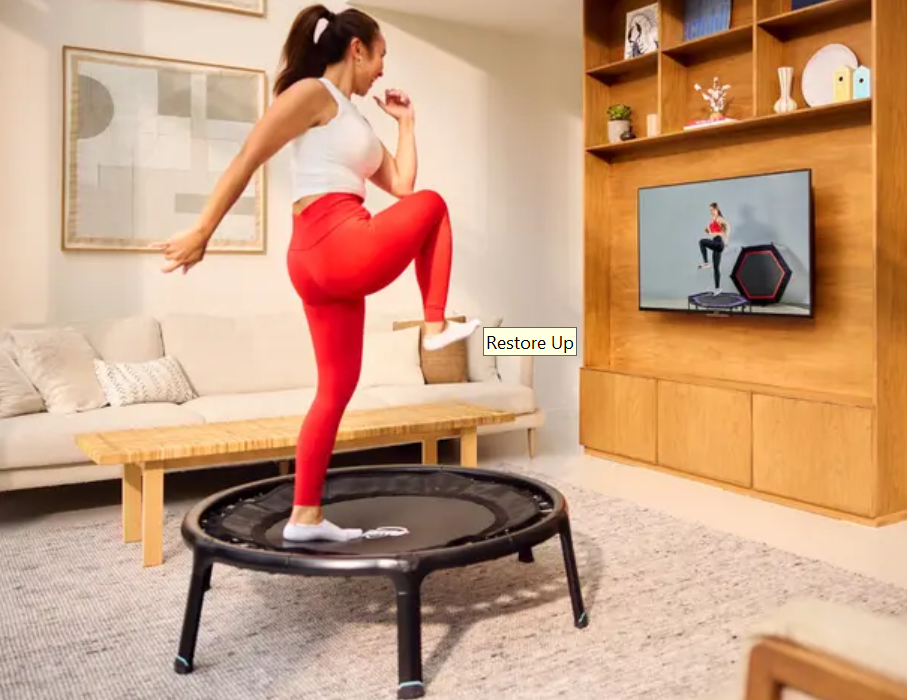
Repeated whole-body movement can make a rebounder session feel noticeably more demanding than standing still or strolling around a room. A basic bounce may be enough for one person, while another might choose a controlled jog with relaxed arm movements. That range makes the activity adaptable, but it does not mean every session produces the same training effect.
Think about effort rather than how high your feet leave the mat. A useful starting point is a pace at which you can still speak comfortably. If talking becomes difficult, slow down or take a break. You do not need to chase breathlessness to make a short session worthwhile, especially while learning how the mat responds.
Progress can mean a little more comfortable moving time, fewer unnecessary pauses or better control at the same pace. Avoid treating minutes on a rebounder as a fixed equivalent to minutes of another activity. Energy use and training demands vary between people and sessions. A realistic routine is more useful than a dramatic comparison or an unsupported calorie figure.
A rebounder has a yielding surface rather than a rigid floor. The BERG 110 uses 36 elastic bands for a smooth, quiet bounce. This can make small movements feel different from repeated jumps on a hard surface, and some people prefer that sensation when choosing an indoor workout.
Lower impact does not mean no physical demand. Your feet, ankles, knees, hips and trunk still work as you move. Technique, pace and personal circumstances influence comfort. Keep the movement small, land with control and avoid forcing a deeper bounce because an instructor or video makes it look easy.
If a movement is uncomfortable, stop rather than assuming that the equipment makes it suitable for everyone. A handlebar offers a handhold, not a guarantee of safety or a substitute for individual advice. Our handlebar versus no-handlebar comparison explains the practical choice without presenting either version as a medical solution.
Staying centred on a responsive mat asks you to pay attention to foot placement, posture and timing. Even a simple alternating march involves coordinating the two sides of the body. When that feels familiar, a modest change in arm position or rhythm can make the task more interesting without requiring a higher bounce.
Treat this as practice, not a test of bravery. Begin with both feet comfortably placed and keep your gaze steady. You can work on a controlled weight shift before attempting any movement that briefly unloads one foot. There is no requirement to close your eyes, bounce on one leg or copy fast choreography.
A stability bar may be helpful if you want a consistent handhold while becoming familiar with the surface. It does not remove the need for supervision where appropriate. For more age-aware starting points, read our guide to rebounding for over-60s. Age alone does not determine which exercise is right for you.
Your legs do much of the visible work during a bounce or march, while your trunk helps you maintain a comfortable upright position. Small changes in stance and pace can make you more aware of that work. Concentrate on relaxed shoulders, soft knees and steady movement rather than bracing rigidly or gripping a bar as hard as possible.
It is important to distinguish using muscles from following a comprehensive strength programme. Rebounding should not be presented as a complete replacement for progressive resistance exercise. It does not automatically provide balanced training for every major muscle group, and a longer bounce is not necessarily a better strength session.
For a varied week, you might combine a rebounder session with walking, suitable strength exercises and other activities you enjoy. Keep unfamiliar exercises simple. Squats, twists and single-leg movements on a moving surface require more control than a basic bounce; they are optional progressions, not essential ingredients.
Exercise is easier to return to when it feels enjoyable rather than punitive. Some people like the rhythm of rebounding, the option to move to music or the novelty of an activity that is different from their usual routine. Others prefer a quiet session without a screen. Neither approach is more valid than the other.
A short movement break can offer a change of focus during a busy day. You may finish feeling refreshed, or you may simply appreciate having made time to move. Those experiences are personal. Rebounding is not a treatment for a mental health condition, and no session should come with a promise about mood or energy.
Set yourself up for a positive experience by choosing achievable sessions. Finishing with comfortable control is more encouraging than pushing through exhaustion. Music should stay quiet enough that you remain aware of your surroundings, and a video should never pressure you to continue with a movement that feels unsuitable.
The convenience of a rebounder is often its strongest selling point. You do not need to travel to a class or wait for dry weather. A manageable session can fit between other commitments, provided the equipment is correctly set up in a clear indoor space.
The BERG 110 has a diameter of 110 cm (43 in), but that is the equipment footprint, not the total space required for exercise. Allow room around it and clear space above your head throughout the intended movement. Ceiling lights, furniture, pets and other people all need consideration before you begin.
Foldable legs can make storage more practical between sessions. However, equipment stored somewhere awkward may be less convenient than it first appears. Think about the whole routine: bringing it out, checking the setup, moving safely and putting it away. Our rebounding at home guide covers flooring, ceiling clearance and everyday storage.
Not every day needs the same workout. On a day when you want gentle movement, an easy march or small feet-on-mat bounce may be enough. When you feel ready for more, you can extend a familiar section or introduce a simple change of rhythm. Keep the movement controlled in either case.
Change one thing at a time. Increasing pace, duration and complexity together makes it harder to judge what is comfortable. A short note after each session can help: record what you did, whether you stayed in control and how practical the setup felt. You do not need detailed tracking or a wearable device.
Our rebounding workouts include optional 10-minute and 20-minute templates. These are organisational examples, not minimum targets or personalised exercise prescriptions. Shorten them, add rests or choose an easier movement whenever needed.
Be cautious about claims that one piece of equipment delivers a guaranteed transformation. Rebounding cannot promise a particular weight change, a specific calorie burn or a health outcome. Nor should it be marketed as a replacement for medical care or a balanced approach to activity.
Weight-related goals deserve realistic expectations. Food intake, activity outside workouts, sleep, preferences and individual circumstances all form part of the picture. If that is your interest, our rebounding for weight loss guide takes a measured approach rather than offering a rapid-results formula.
Marketing language about lymphatic wellness also needs care. Enjoying gentle movement is a reasonable personal goal; treating a trampoline as a health intervention is a different claim. Read our lymphatic wellness and rebounding page for clear boundaries around this subject.
A useful rebounder is one that fits your space, intended use and confidence level. The BERG Fitness Trampoline 110 offers the straightforward option without a handlebar. The BERG 110 with Stability Bar adds a handhold for those who would value one.
Both options have a maximum user weight of 120 kg (approx. 19 st). Follow that limit and the supplied instructions rather than judging suitability from appearance alone. The product is for indoor use and ages 14+, with no safety net. Leave space around it and keep children and pets away during exercise.
Finally, remember that consistency does not mean exercising through discomfort or using the rebounder every day. It means finding an approach you can return to sensibly. Start simply, make deliberate adjustments and choose other activities when they better suit your day. For setup and technique pitfalls, see common rebounding mistakes.
Without handlebar
Quiet, foldable, elastic-band rebounder
See today's price
Buy now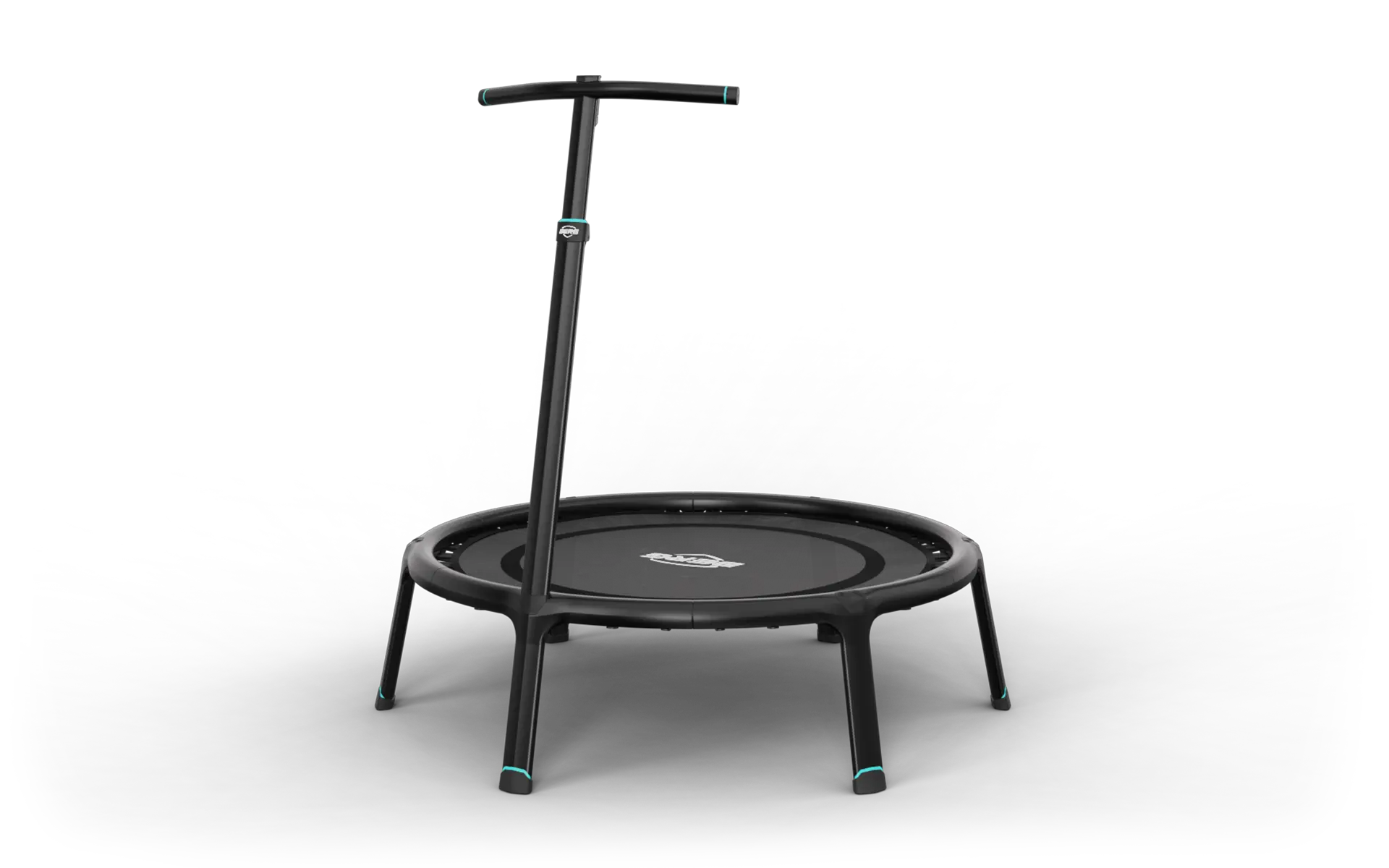
With handlebar
The same rebounder, with a handlebar for support
See today's price
Buy nowBERG 110 Rebounder
See today's price