Start with control, not height
Your first rebounder session does not need music, a timer challenge or a complicated routine. The useful first skill is learning how the mat responds beneath your feet. Stand near the centre, keep your knees soft and begin with a small downward press rather than trying to jump upwards. Your feet can remain in contact with the mat while you find a comfortable rhythm. Stop before you feel rushed or unsteady.
Treat online routines as ideas rather than instructions you must complete. Someone demonstrating fast footwork may have practised for a long time. Your starting point should reflect your confidence, current activity and available space. A gentle beginning gives you time to learn where your feet land and how to stop calmly.
Choose a setup that supports confidence
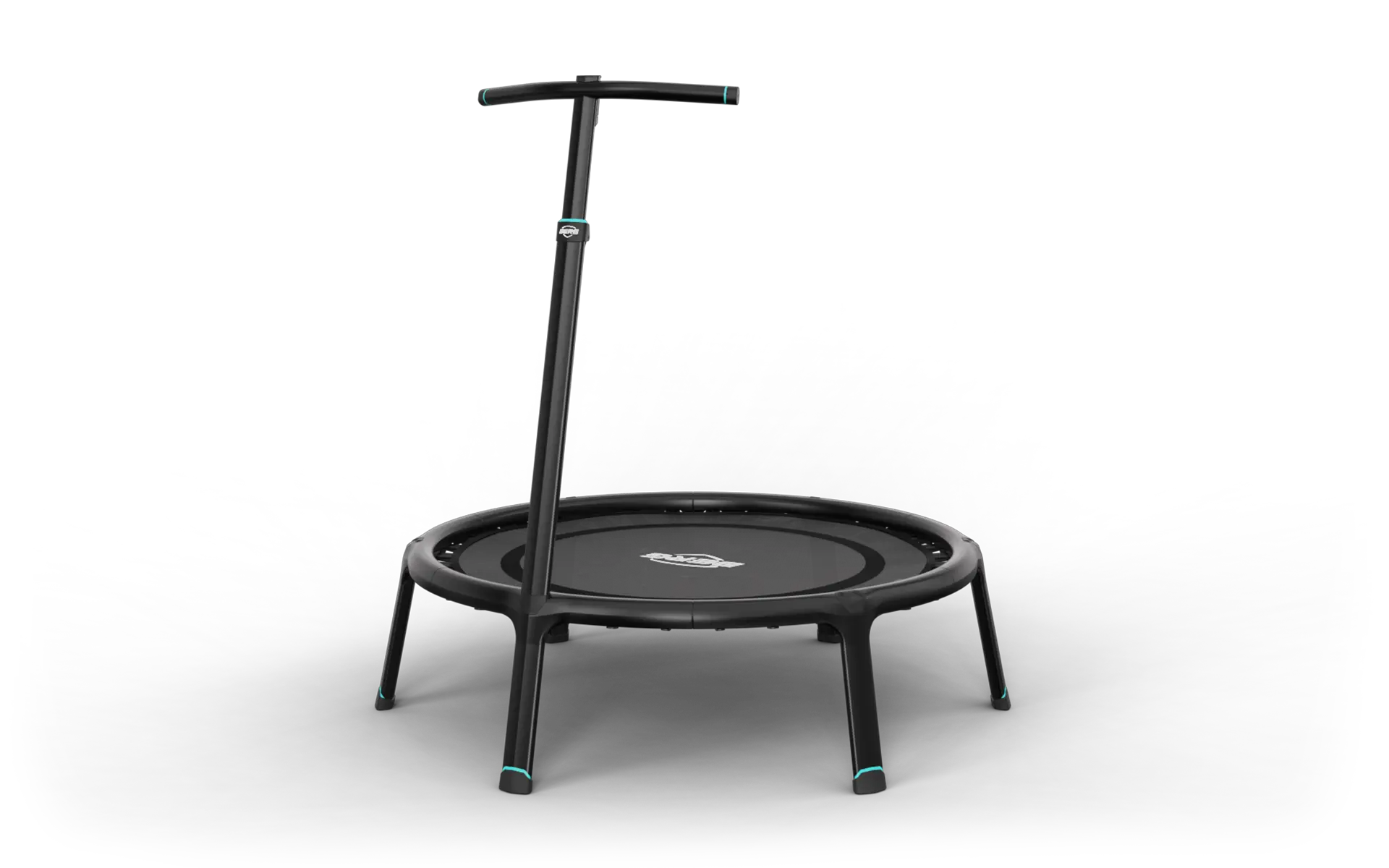
Beginners should consider the BERG version with a stability bar, particularly if having a point of support would make getting started less daunting. A bar is not an instruction to bounce faster, lean backwards or hang your weight from your arms. Read the supplied instructions for assembly and correct use, and keep movement controlled. If you need support for everyday standing or walking, seek individual advice before deciding whether a rebounder is appropriate.
Before every session, check that the rebounder is correctly assembled, the legs are secure and the floor is level. Keep loose objects, pets and other people away from the equipment. The BERG model is intended for indoor use, for users aged 14 and over, with a maximum user weight of 120 kg (approx. 19 st). It has no safety net.
Give yourself room to move
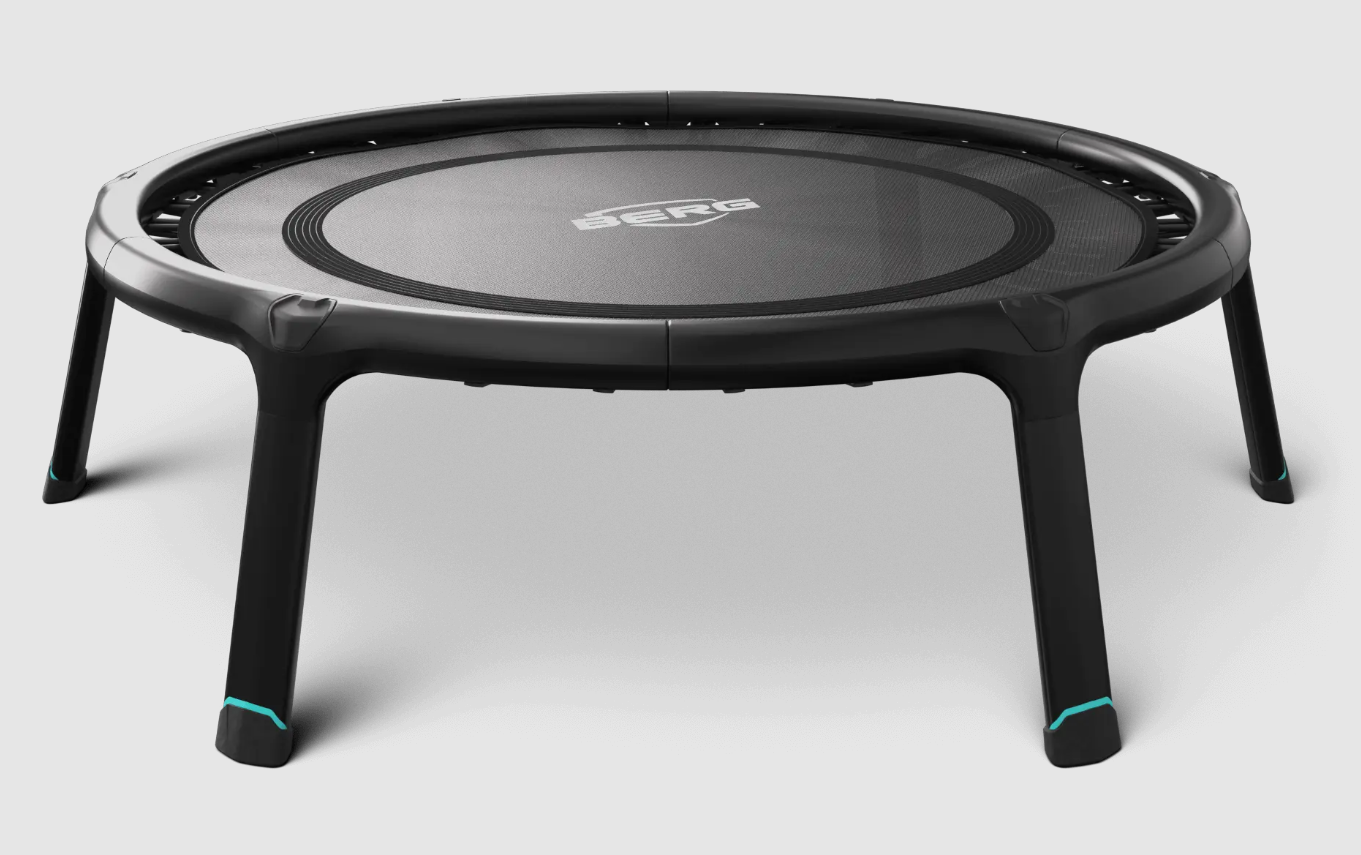
The BERG 110 measures 110 cm (43 in) across and stands 30 cm (12 in) high on its legs. That footprint is only the beginning of your space check. You also need room to step on and off without twisting around furniture. Move away from glass, sharp edges, doors and anything you could knock with an outstretched arm.
Check headroom while standing on the mat and allow for the movement you intend to make. Ceiling lights and fans matter just as much as the ceiling itself. There is no single ceiling-height recommendation that suits every person and routine. If the space feels restrictive, choose another location rather than trying to adapt your posture around an obstacle.
A first session you can repeat
Start by standing still and becoming familiar with the surface. Make a few small weight shifts without lifting your feet, then try gentle presses through both feet together. Keep looking ahead rather than watching every movement of your shoes. Allow your arms to help you balance, or use the stability bar as directed if you have chosen that version.
Pause on the mat until it is still before stepping off. Do not jump down to finish a set. Repeat only while you remain comfortable and in control. The aim is to finish knowing how to start, stop and step off safely, not to prove that you can keep up with a video. Learning those transitions is worthwhile practice in its own right.
How long should a beginner bounce?
There is no universal starting duration. As an illustrative first attempt, try a minute or two of gentle movement, then stop and reassess. You may prefer several short bouts separated by rest rather than one uninterrupted session. This is a practical starting idea, not a prescription or a minimum you must achieve.
Pay attention to how you feel during the session and afterwards. If a short session leaves you unusually tired or uncomfortable, do less next time and consider whether you need advice. If it feels manageable, repeat it on another day before extending it. Increase one element at a time: duration, pace or complexity. Adding all three makes it harder to understand what your body is comfortable doing.
Keep the first movements simple
Small presses and gentle marching are enough to begin with. When marching, lift one foot only as far as you can comfortably control, placing it back before moving the other. You do not need wide jumps, quick turns or single-leg challenges to make a session worthwhile. Keep your feet within a comfortable central area of the mat rather than working close to the edge.
Use a pace at which you can still speak comfortably. That is a rough effort check, not a medical test. Stop if you feel dizzy, develop pain or become unexpectedly breathless. Never use the handlebar to push through symptoms. If symptoms are severe or concerning, seek appropriate medical help rather than simply trying a shorter session.
Build a habit before a harder workout
Choose a time when you are unlikely to be interrupted and leave enough time to set up properly. Keep a short note of what you did and how it felt. Recording a few calm minutes is more useful than chasing a calorie estimate that may not reflect your actual effort. A repeatable routine should fit around your week, not become another source of pressure.
Once stopping and stepping off feel familiar, gradually combine gentle marching with small two-foot presses. Keep a familiar movement available whenever a new one feels awkward. There is no deadline for moving on from the basics, and no requirement to progress towards high bouncing. Confidence comes from being able to choose and control your movement, including deciding when to stop.
Find the right BERG setup
Compare both BERG rebounders before choosing. The BERG Fitness Trampoline 110 offers the clear-front setup, while the BERG 110 with Stability Bar adds a point of support. Read the product details, check your room and ask about anything that is unclear before ordering. The right choice is the version you can use comfortably and as intended, not the one associated with the most ambitious routine.
If you have a medical condition, speak to your GP or physiotherapist before starting. If you are pregnant, returning after injury or unsure whether this activity suits you, seek individual advice before starting. Stop if movement causes pain, dizziness or unusual breathlessness, and seek appropriate help for concerning symptoms.