Age is not a complete starting assessment
Being over 60 does not describe one level of fitness, confidence or balance. Some people already exercise regularly; others are returning after a long break or managing changes in mobility. A useful decision about rebounding starts with your current situation, not an assumption that everyone of the same age should follow the same routine.
A rebounder is a moving surface, so familiarity with walking or another activity does not automatically make it feel comfortable. You do not need to prove you can use one without support. Take time to consider stepping on and off, controlling the mat and stopping safely before thinking about workout duration. Choosing another activity is also a perfectly reasonable outcome.
Ask for individual advice when needed
If you have concerns about balance, a history of falls, a recent injury or surgery, or a health condition that affects exercise, ask your GP or physiotherapist whether this activity is appropriate. Explain that you would be standing on a small moving mat rather than simply marching on a firm floor. That distinction helps make the conversation useful.
If you have an existing rehabilitation plan, do not replace it with an online rebounder routine. Ask the professional guiding your care about any proposed addition. General advice cannot assess how symptoms, medication or mobility affect your safety. Nor can a product description decide whether you need another person present or whether a different form of movement would suit you better.
Consider the stability bar version
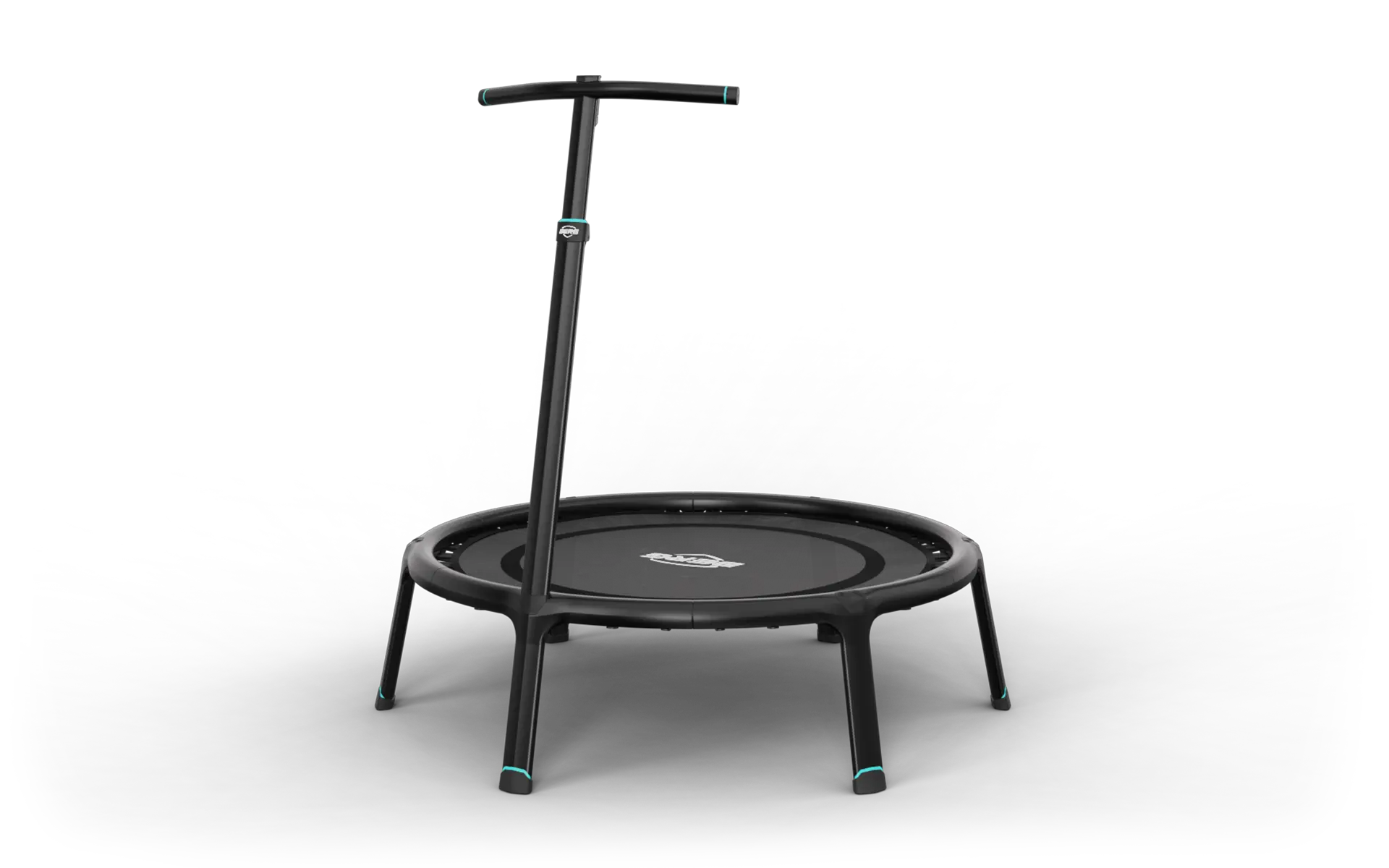
For older adults considering their first rebounder, the BERG version with a stability bar is worth considering. A point of support may make the experience feel less daunting while you learn the surface. This is a choice about confidence and appropriate support, not a promise that a bar prevents falls or makes every balance difficulty manageable.
Follow the instructions for assembly and use. Do not pull yourself into a higher bounce or hang from the bar. If getting onto the mat or standing comfortably requires more help than the equipment provides, stop and seek advice rather than improvising with furniture. A chair placed nearby is not a substitute for an assessed support arrangement or correctly assembled equipment.
Make the room part of your safety plan
Choose a level, stable floor and clear the surrounding space. Remove loose rugs, trailing leads and objects that could obstruct stepping on or off. Keep pets and other people outside the exercise area. Good lighting helps you see the edge of the equipment and the floor without having to peer down throughout the session.
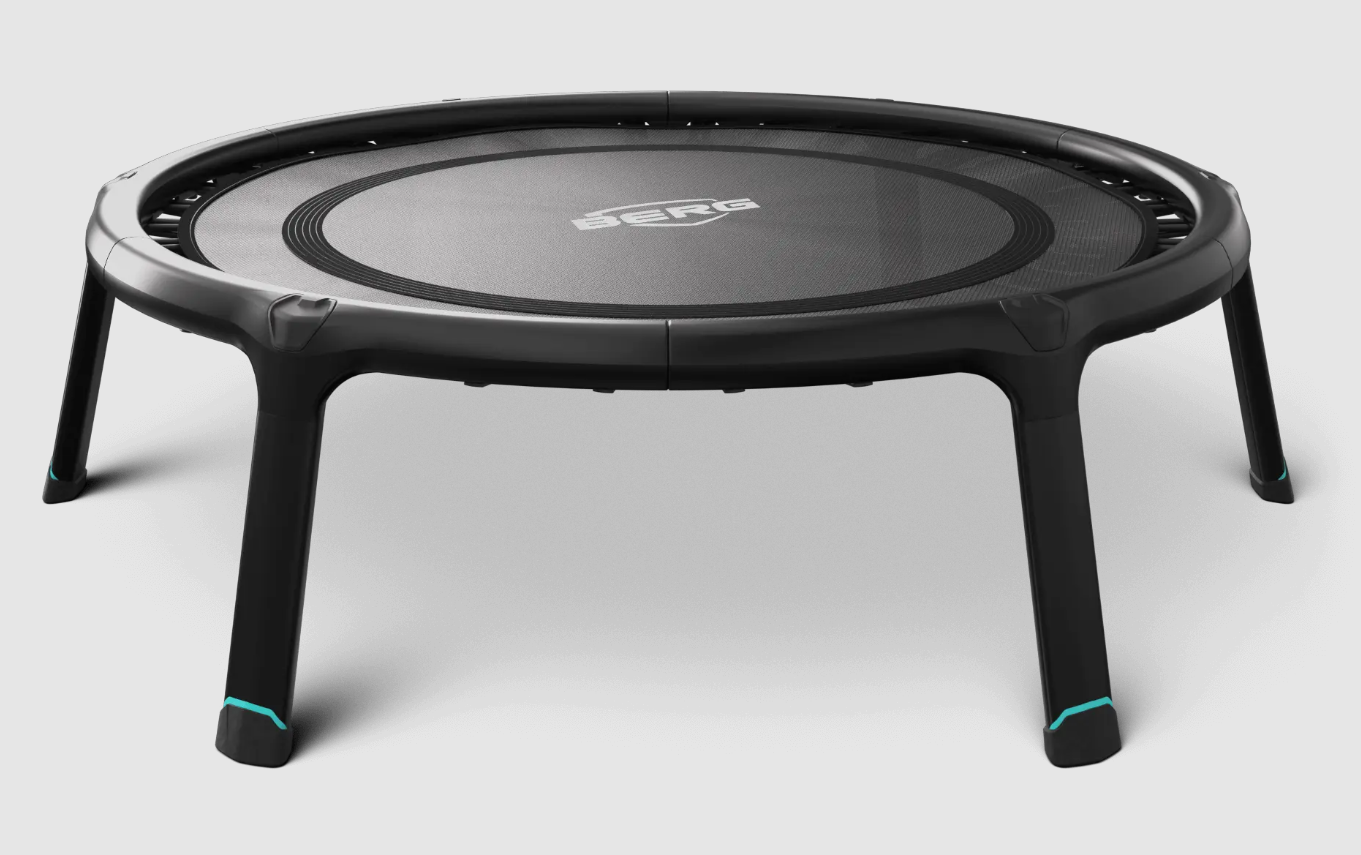
The BERG 110 is 110 cm (43 in) across and 30 cm (12 in) high on its legs. Allow room beyond the frame and check overhead clearance for your own height and intended movement. Do not position it where a door may open into you. If setup involves moving heavy furniture each time, consider whether another location would be easier to use calmly.
Practise the transitions before a routine
Read the instructions and make sure you understand how to step on, stop and step off. Begin by standing still, then make very small weight shifts if comfortable. Keep your knees relaxed and your gaze ahead. Avoid looking down continuously or rushing to imitate a video. The first session can be about familiarisation rather than exercise time.
Wait until the mat is still before stepping off deliberately. Do not jump down or turn away while the surface is moving. If you have been advised to have supervision, arrange it before starting rather than waiting until you feel uncertain. A useful session ends with a controlled transition back to the floor, not simply when the music or timer stops.
Keep the movement small and optional
Gentle presses with both feet remaining on the mat are a sensible movement to explore if rebounding has been judged appropriate for you. You can stop after a short attempt and reassess. There is no minimum bounce height, no required speed and no need to progress towards jumps, turns or single-leg exercises.
If gentle marching feels comfortable, keep it slow enough to place each foot deliberately. Stop if your position begins drifting towards the edge or if you need to grip harder to maintain control. Making a movement smaller is a useful adjustment, not a failure. If you cannot regain comfortable control, end the session and reconsider whether you need advice or a different activity.
Let your response set the pace
Begin with a brief period rather than adopting a standard workout length. Rest between attempts and notice how you feel both during movement and afterwards. Increase only when the existing routine feels manageable. There is no timetable based on age that tells you when to add more time, faster steps or another movement.
Stop for pain, dizziness, unusual breathlessness or any symptom that concerns you. Seek appropriate medical help when symptoms are severe or worrying. Do not regard a bar as permission to continue through symptoms. If a new routine leaves you uncomfortable, speak to your clinician where relevant instead of assuming that pushing harder is necessary to make progress.
Buy for your needs, not an age label
The BERG 110 is intended for indoor use, for ages 14 and over, with a maximum user weight of 120 kg (approx. 19 st). Those limits still apply when the stability bar is fitted. Its elastic-band bounce is quiet and smooth, but this does not establish suitability for any particular medical condition or guarantee a particular outcome.
Before ordering, think through the entire routine: retrieving the rebounder, setting it up, using it, stopping and storing it. Ask about any storage detail that is important to your room rather than guessing folded dimensions. A sensible choice is one that matches your space, confidence and any professional advice you have received. There is no need to buy until those questions are answered.
Find the right BERG setup
Compare both BERG rebounders before choosing. The BERG Fitness Trampoline 110 offers the clear-front setup, while the BERG 110 with Stability Bar adds a point of support. Read the product details, check your room and ask about anything that is unclear before ordering. The right choice is the version you can use comfortably and as intended, not the one associated with the most ambitious routine.
If you have a medical condition, speak to your GP or physiotherapist before starting. If you are pregnant, returning after injury or unsure whether this activity suits you, seek individual advice before starting. Stop if movement causes pain, dizziness or unusual breathlessness, and seek appropriate help for concerning symptoms.