Exercise is one part of a bigger picture
Rebounding can be an enjoyable way to add movement to your week, but buying a trampoline does not guarantee weight loss. Body weight is influenced by eating patterns, activity, sleep, health and other personal circumstances. The same routine can feel different to two people, and no honest guide can promise a particular result from a fixed number of minutes.
A more useful starting question is whether rebounding is an activity you would choose to repeat. If a short home session feels convenient and enjoyable, it may be easier to make room for it consistently. That practical fit matters more than choosing a workout because its headline promises the fastest transformation.
Be cautious with calorie claims
Calorie expenditure varies with body size, effort, duration, technique and other factors. A generic figure attached to a rebounding video cannot measure your own session accurately. Watches and exercise apps can offer estimates, but an estimate should not become a precise allowance for food or a score that decides whether your movement was worthwhile.
We do not offer a guaranteed calorie burn or a timetable for losing a particular amount of weight. Be especially cautious when an advert turns a very short routine into an apparently exact substitute for a much longer activity. Different exercises involve different movements and demands. Choose sessions you can control rather than trying to reproduce an advertised numerical equivalence.
Choose an achievable starting point
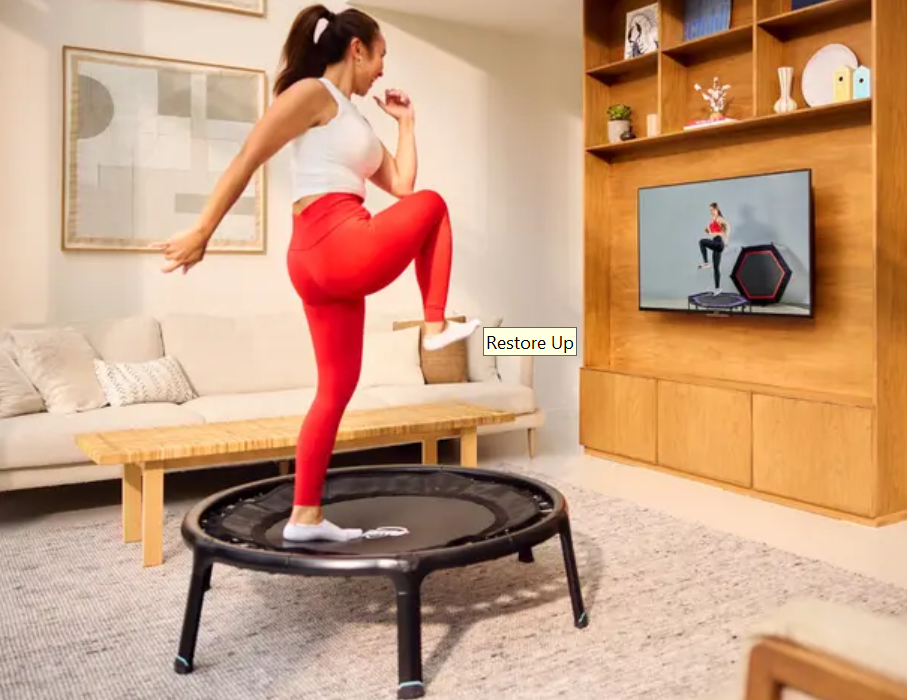
If you are new to exercise, begin with gentle movement and short bouts rather than a demanding interval class. Pressing lightly into the mat or marching slowly can help you learn the surface. Keep the bounce low, look ahead and stop while you still feel in control. There is no requirement to leave the mat or move quickly to call it a session.
A few manageable minutes can be a more useful beginning than a long workout that leaves you reluctant to return. Repeat a comfortable session before making it longer. If you extend duration, keep the movements familiar. If you try something more complex, keep the session short. This makes it easier to notice what you can manage without treating exhaustion as the goal.
Use effort, not punishment, to guide you
Aim for a pace that feels purposeful but manageable. Being able to speak comfortably can be a rough guide during an easy session, although it is not a medical assessment. Rest when you need to and slow down before your foot placement becomes untidy. You should be able to bring the mat to a stop deliberately.
Do not use exercise to compensate for a meal or as a penalty for a change on the scales. That approach can make movement stressful and encourage doing more than you intended. If thoughts about food, weight or exercise are becoming difficult to manage, seek qualified support. A rebounder should be an optional tool for activity, not a test of your discipline or worth.
Plan a week you can actually live with
Look at the days when a home session is genuinely convenient. You might find a short routine before work easier than an ambitious evening plan, or prefer movement on a quieter afternoon. Leave time for setup, a gradual start and a calm finish. A session that requires rushing around furniture is not a good fit just because it is brief.
Keep other activities you enjoy, including walking or everyday movement, rather than assuming everything needs replacing with rebounding. Variety can make a routine less repetitive. If you miss a planned session, resume when practical rather than trying to make up every minute at once. Consistency should mean returning to a workable habit, not maintaining an unbroken streak at any cost.
Track what the routine gives you
A simple log might record the movements, approximate duration and how the session felt. Notice practical changes such as becoming more familiar with the mat, finding setup easier or completing your planned routine without rushing. These observations tell you something useful even when weight changes slowly or not at all.
If you choose to monitor body weight, avoid interpreting every short-term change as a verdict on your exercise. A single reading cannot explain what caused it. Seek personalised advice from an appropriate professional if weight management is a health concern. General exercise copy cannot account for your medical history, medication, nutritional needs or relationship with food, and should not pretend to do so.
Check the equipment before the ambition
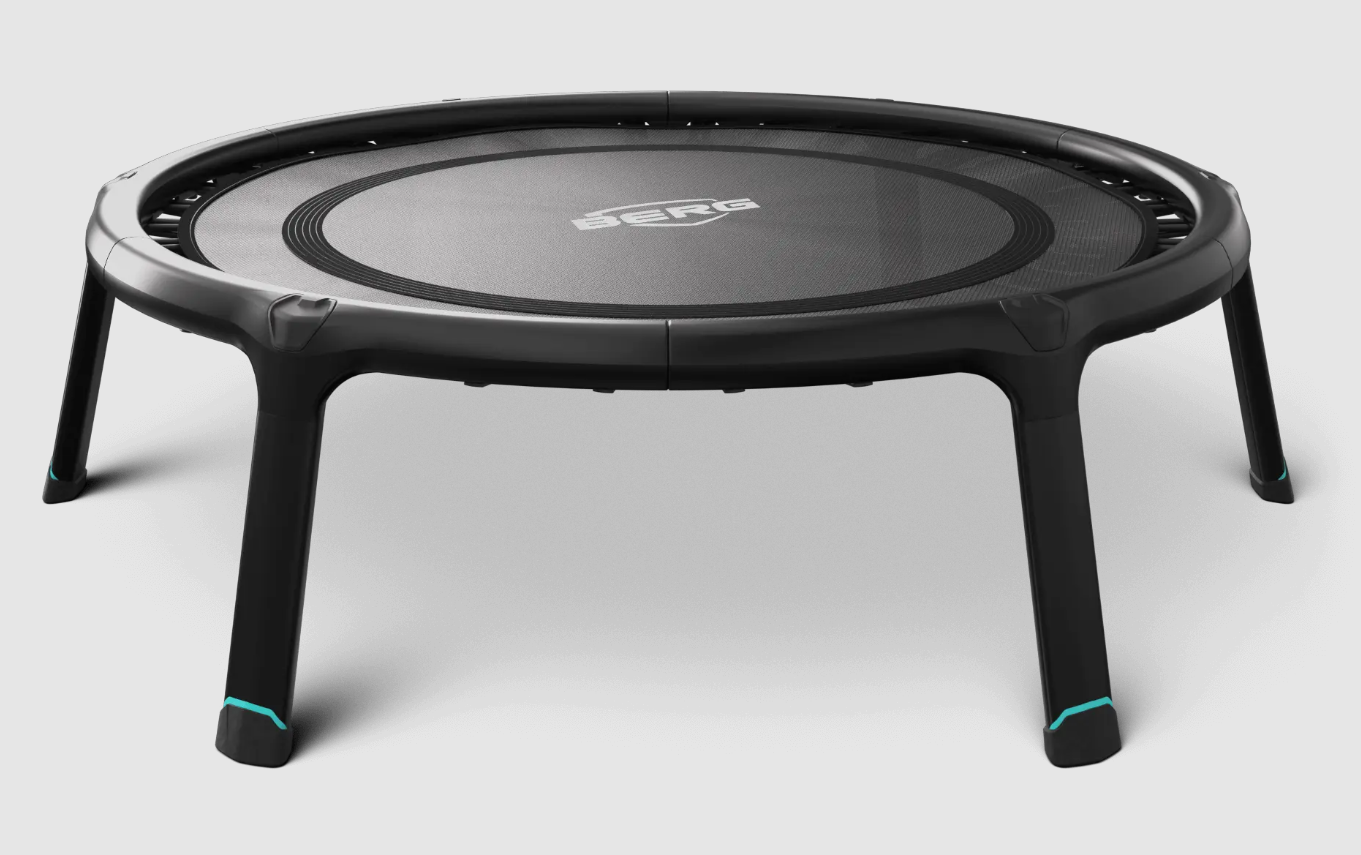
The BERG 110 is for indoor use, users aged 14 and over, and a maximum user weight of 120 kg (approx. 19 st). The maximum test weight is not an alternative user allowance. If the user limit does not suit you, do not use the product in the hope that a gentle routine makes the limit irrelevant.
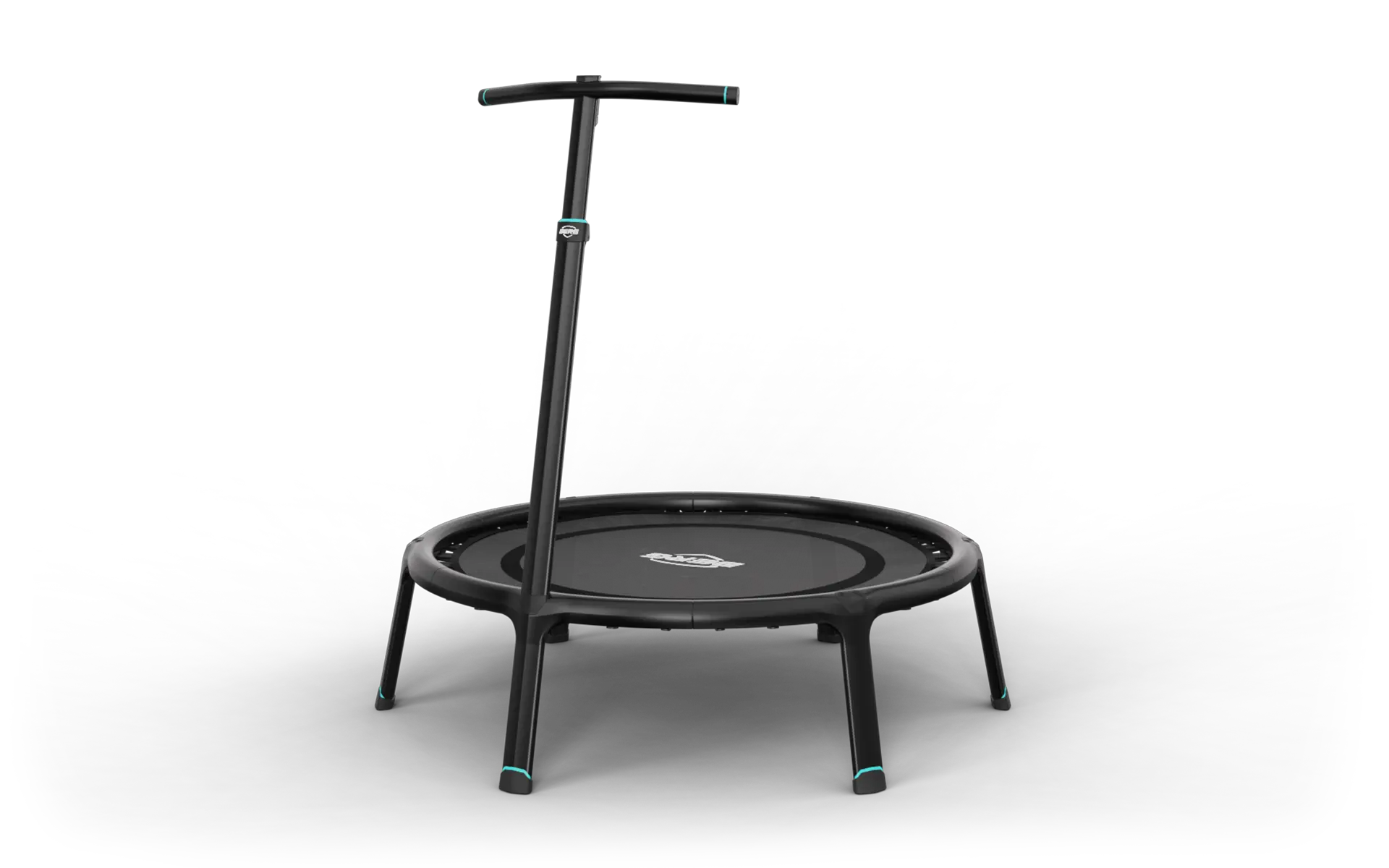
Its diameter is 110 cm (43 in), and it stands 30 cm (12 in) high on its legs. Clear the surrounding area and check overhead space before starting. Consider the stability bar version if a point of support would help your confidence. A bar does not change the weight limit or make difficult movements appropriate before you have learnt the basics.
Keep the long-term goal realistic
A worthwhile outcome might be finding an activity that fits your home, feels enjoyable and helps you spend some time moving. Weight loss may be a personal goal, but it should not be presented as an automatic product benefit. Food advice, health concerns and individual targets are best discussed with appropriately qualified professionals when you need tailored support.
Before buying, ask whether you have a safe place to use the rebounder and a realistic reason to prefer it to other activities. If the answer is yes, begin with a modest routine and review how it fits your life. Choose the equipment for the movement you want to do, not because a dramatic promise suggests it can do the work for you.
Find the right BERG setup
Compare both BERG rebounders before choosing. The BERG Fitness Trampoline 110 offers the clear-front setup, while the BERG 110 with Stability Bar adds a point of support. Read the product details, check your room and ask about anything that is unclear before ordering. The right choice is the version you can use comfortably and as intended, not the one associated with the most ambitious routine.
If you have a medical condition, speak to your GP or physiotherapist before starting. If you are pregnant, returning after injury or unsure whether this activity suits you, seek individual advice before starting. Stop if movement causes pain, dizziness or unusual breathlessness, and seek appropriate help for concerning symptoms.