Mistake one: starting with the hardest video
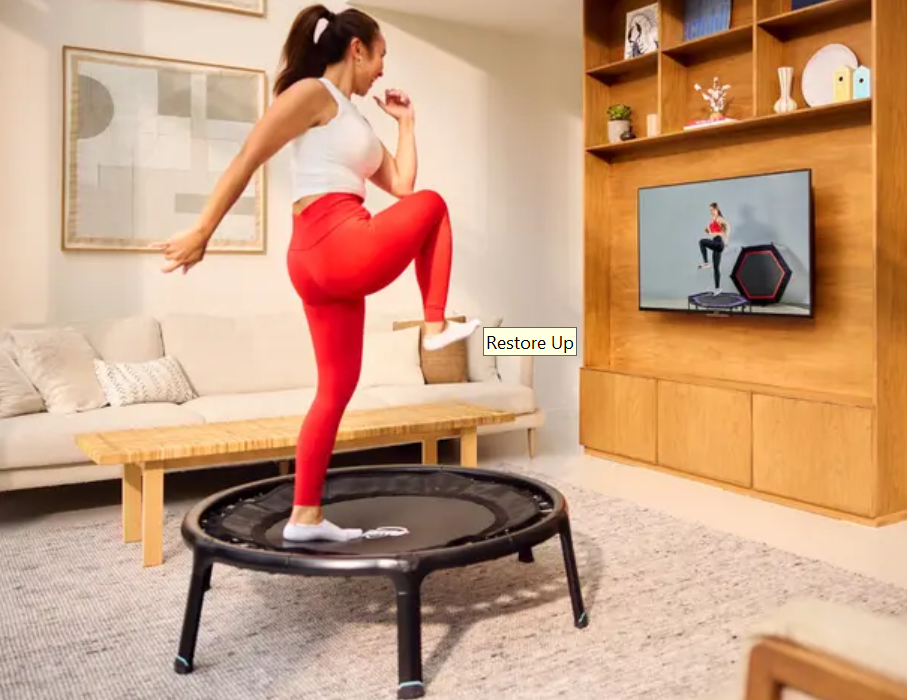
A fast online routine can make rebounding look deceptively simple. What you do not see is the practice behind the presenter’s footwork or whether the routine suits your experience. Beginning with rapid changes of direction can leave you concentrating on keeping up rather than noticing where your feet land.
Start with a quiet, controlled session without needing to match a screen. Learn small presses, gentle marching and a deliberate stop. Once those feel familiar, add one new movement at a time. You can pause a video, reduce the pace or ignore a movement entirely. A routine is useful only when you remain in control of it, including choosing not to finish.
Mistake two: treating height as the goal
A fitness rebounder does not require dramatic jumps. Trying to bounce as high as possible can make it harder to control position and reduce the space between you and overhead fittings. It also changes the demands of the routine without necessarily helping you practise the basic skills you need.
Think about a small, deliberate press into the mat instead of launching upwards. Keep your knees relaxed and settle into a rhythm you can stop. Feet can remain in contact with the surface while you learn. If a movement makes you drift or rush, make it smaller. Returning to a simple movement is a practical way to regain control, not a step backwards.
Mistake three: checking only the footprint
It is easy to measure the space occupied by the frame and forget everything around it. Furniture corners, an opening door, ceiling lights and a pet walking past can all interfere with a session. You also need a clear route onto and off the equipment, not just enough space to stand on it.
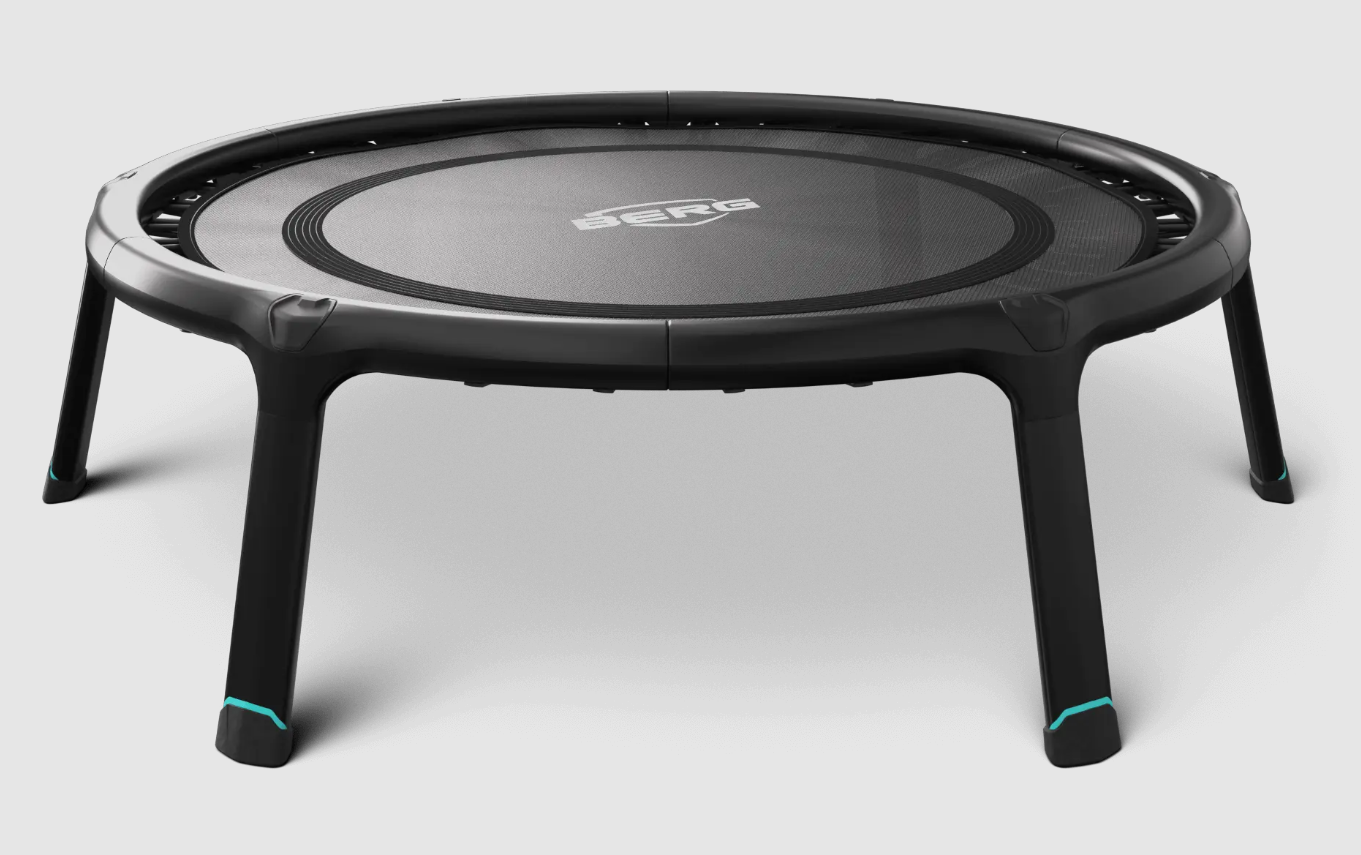
For the BERG 110, allow for a diameter of 110 cm (43 in) and a height on legs of 30 cm (12 in), then assess the surrounding and overhead space for your own movement. There is no universal room-clearance figure that suits every person and routine. If you cannot move without avoiding an obstacle, find a better location before starting.
Mistake four: assuming a bar does everything
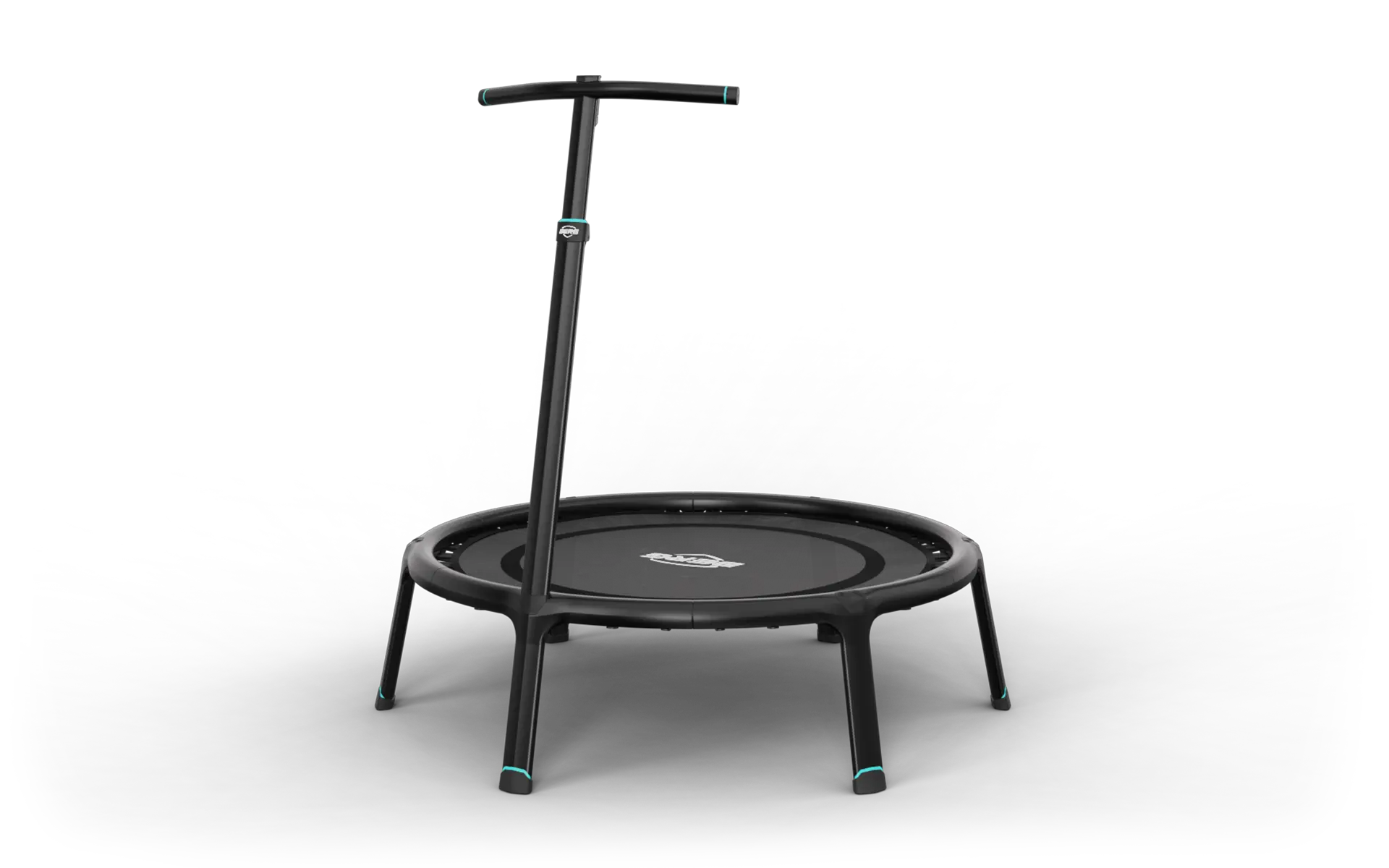
A stability bar can offer a point of support, but it is not a substitute for a suitable routine or correct setup. Pulling hard on it to maintain a fast pace can conceal that the movement is beyond your current control. Nor does fitting a bar remove the need to assess whether rebounding is appropriate for you.
Use the bar only as directed in the instructions. If you are a beginner or feel uncertain about the moving surface, consider the bar version from the outset rather than improvising a support from furniture. If you need substantial help to stand or step on and off, seek individual advice. The answer may be a different activity, not a stronger grip.
Mistake five: adding too much at once
Longer sessions, faster movement and more complicated steps each change the challenge. Increasing all of them together makes it difficult to know which part feels uncomfortable or causes your technique to become hurried. A demanding first session can also make a repeat session much less appealing.
Choose one small change and keep the rest familiar. For example, repeat your usual gentle movements for a little longer before trying a new step on another day. Rest when needed and do not use a timer as an instruction to ignore fatigue. Your session length is a choice, not a debt that has to be completed regardless of how you feel.
Mistake six: ignoring the beginning and end
People often focus on the active part of a workout and rush the transitions. Stepping onto an unfamiliar moving surface while distracted, or jumping off as soon as a timer sounds, can undo the care taken during the routine itself. Give setup and stopping their own place in the session.
Check the equipment before starting, step on deliberately and begin with gentle movement. At the end, reduce the movement, let the mat become still and step off with attention. Keep your phone, water and other objects outside the exercise area so you are not reaching awkwardly for them. Take a break off the equipment rather than trying to multitask while bouncing.
Mistake seven: treating quiet as silent
The BERG elastic-band system provides a quiet, smooth bounce, but a quiet mechanism is not a promise of silent use in every building. Floor vibration, foot placement and the type of movement can still be noticeable to someone nearby. Ignoring that distinction can create an avoidable problem in a flat or shared home.
Use a level, stable position and test gentle movement at considerate times. Ask someone nearby what they can hear, if practical. Do not place the equipment on an unstable pile of soft materials in an attempt to isolate noise. If transmitted sound remains a problem, alter your routine, timing or location rather than assuming that harder bouncing will somehow settle the equipment.
Mistake eight: overlooking care and limits
A rebounder that was assembled correctly once still needs regular attention. Before use, check the mat, suspension, frame and legs, plus the stability bar if fitted. Follow the supplied instructions. Stop if something appears damaged or unstable rather than continuing because the session is nearly finished. Ask for approved repair advice instead of improvising components.
Respect the product’s intended use as well. The BERG 110 is for indoor use, ages 14 and over, with a maximum user weight of 120 kg (approx. 19 st). It has no safety net. Do not confuse a test weight with an allowance for heavier users. The simplest way to avoid many common mistakes is to use the equipment as intended and keep the routine comfortably within your control.
Find the right BERG setup
Compare both BERG rebounders before choosing. The BERG Fitness Trampoline 110 offers the clear-front setup, while the BERG 110 with Stability Bar adds a point of support. Read the product details, check your room and ask about anything that is unclear before ordering. The right choice is the version you can use comfortably and as intended, not the one associated with the most ambitious routine.
If you have a medical condition, speak to your GP or physiotherapist before starting. If you are pregnant, returning after injury or unsure whether this activity suits you, seek individual advice before starting. Stop if movement causes pain, dizziness or unusual breathlessness, and seek appropriate help for concerning symptoms.