The names overlap, but the details matter
A rebounder is a small trampoline commonly used for exercise through repeated, controlled bouncing. Mini trampoline is a broader description of size rather than a reliable promise about purpose. In shops and everyday conversation, the same adult fitness product may be described using either term. The name alone will not tell you whether equipment is suitable for your home or the person who wants to use it.
Instead of trying to find a strict dividing line between the labels, read the intended-use information. An adult exercise trampoline, a small play trampoline and equipment used in a supervised setting can have different requirements. Similar-looking photographs do not establish equivalent specifications, user limits or assembly instructions.
Start with who will use it
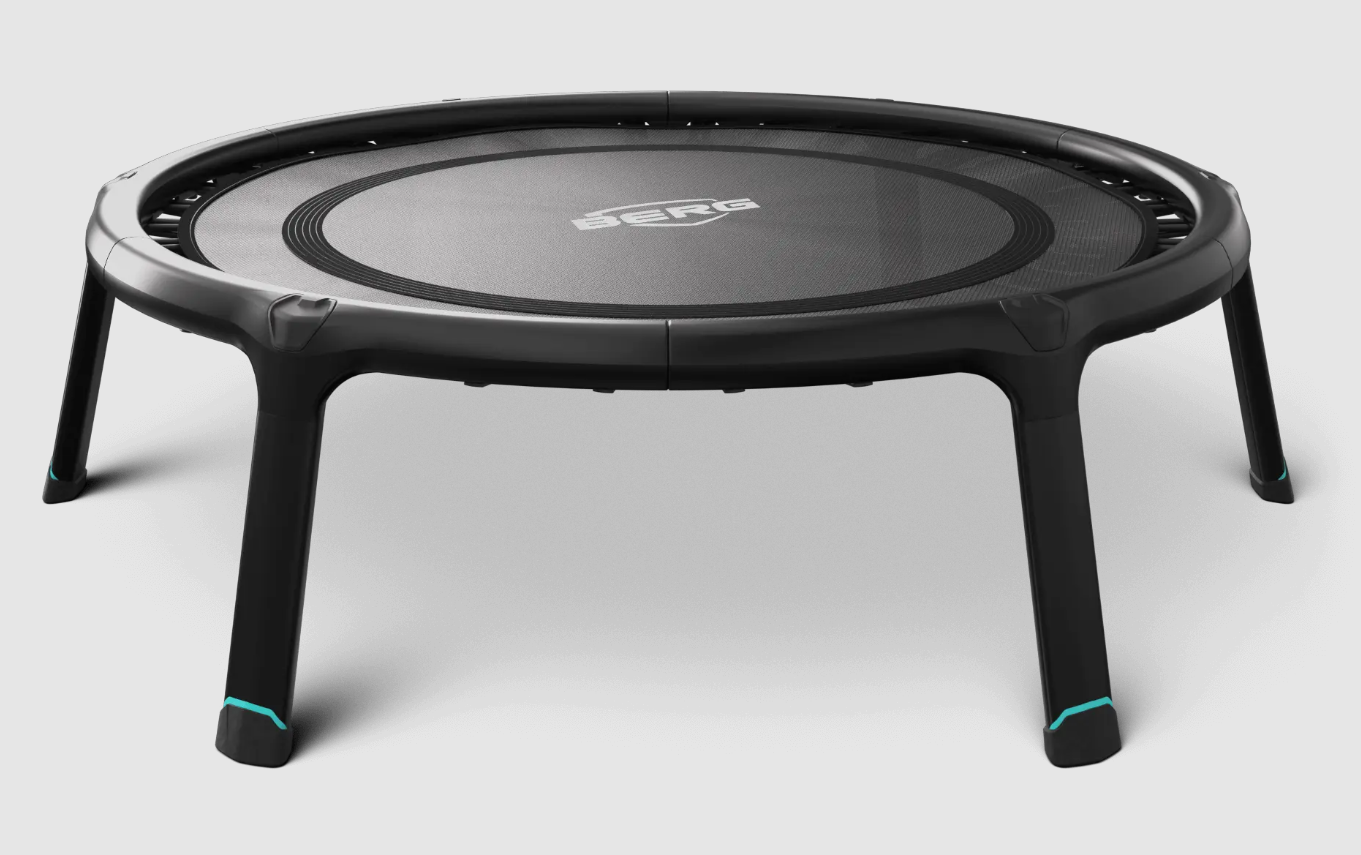
Check the stated age range and maximum user weight before comparing accessories or appearance. The BERG Fitness Trampoline 110 is rated for ages 14 and over and a maximum user weight of 120 kg (approx. 19 st). It is an indoor fitness product with no safety net. Calling it a mini trampoline does not turn it into equipment for younger children or outdoor play.
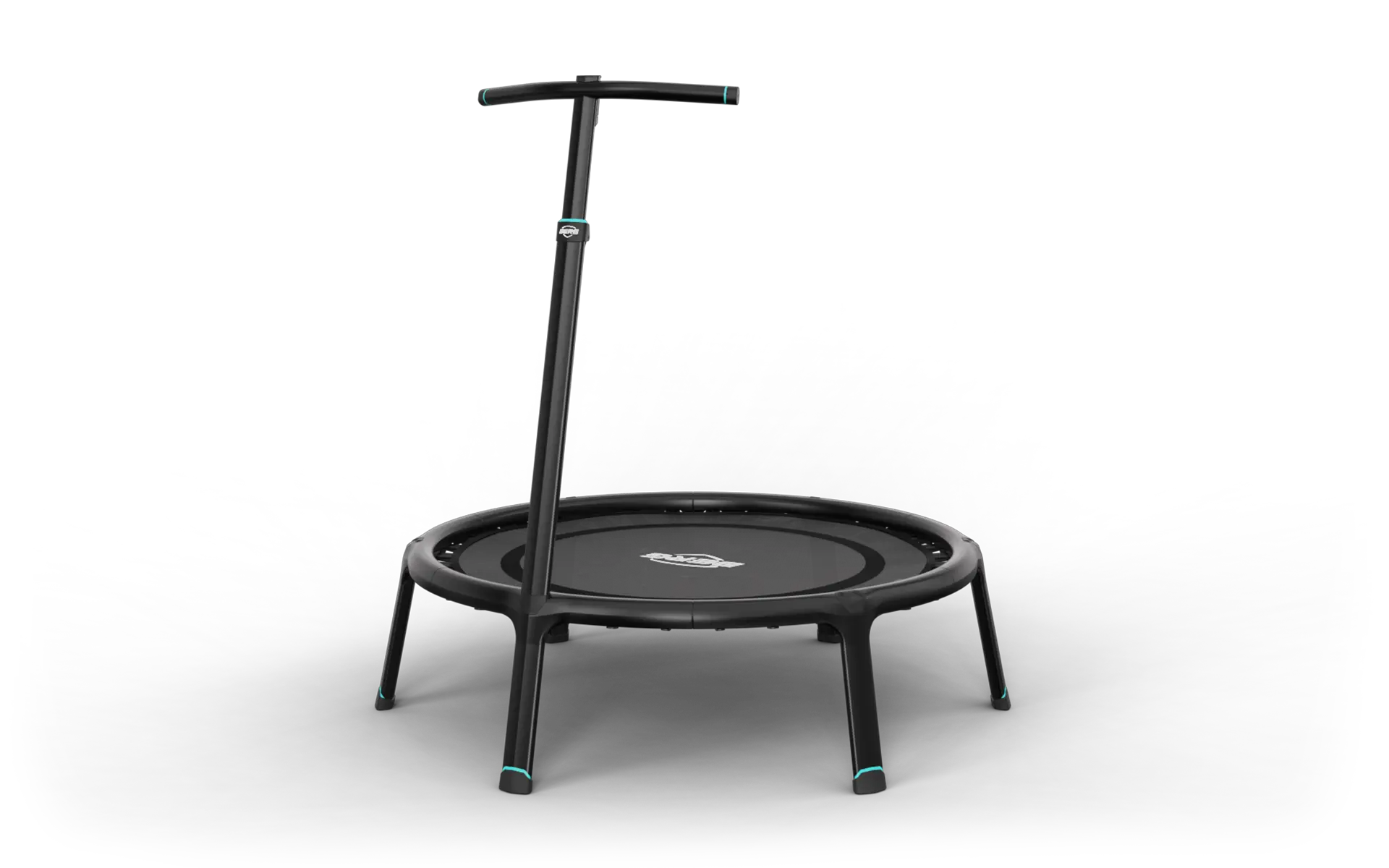
Consider confidence as well as body size. Someone new to a moving surface may prefer a stability bar; someone with established balance and a simple exercise routine may prefer a clear space in front of them. Neither preference changes the need to read instructions, set up the rebounder correctly and use controlled movements.
Compare the space you actually have
The BERG model has a round diameter of 110 cm (43 in) and a total height of 30 cm (12 in) on its legs. These measurements help you plan its footprint, but they are not a complete room-clearance calculation. Think about access, nearby furniture, ceiling fittings and where your arms will travel during a routine.
Do not assume that a compact product is automatically suitable for every small room. Stand in the proposed space, imagine stepping on and off, and check whether another person could open a door into your exercise area. Your routine may be small and gentle, but the area around it still needs to be clear. Measure before ordering rather than relying on a lifestyle photograph.
What creates the bounce?
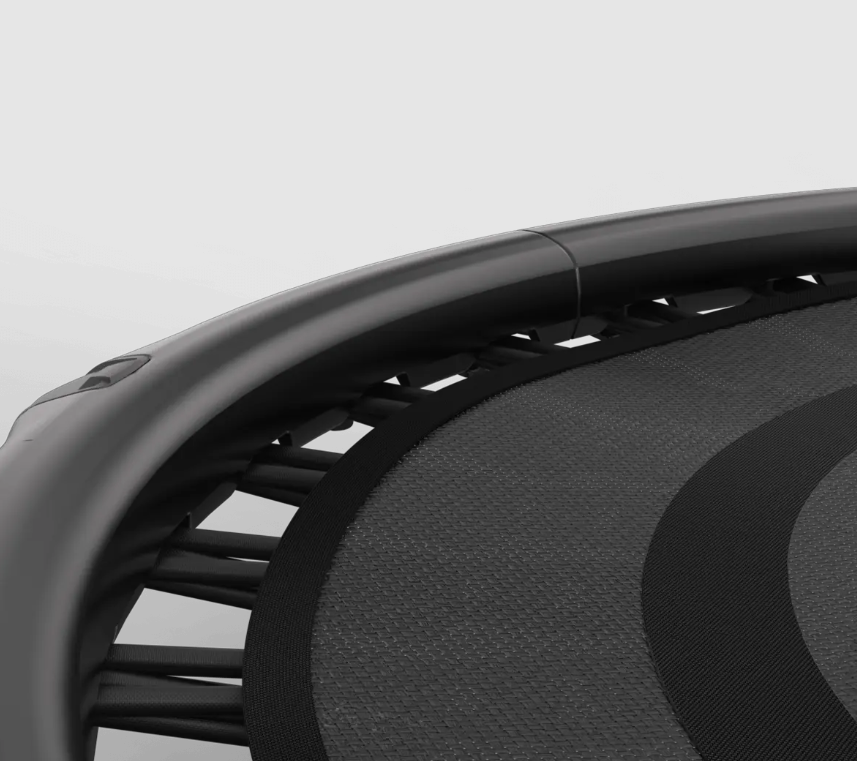
A rebounder may use elastic bands or metal springs to connect its mat and frame. The BERG 110 uses 36 elastic bands, giving a quiet, smooth bounce without metal springs. That is a specific feature of this model, not a definition that applies to every item sold as a rebounder. Some products described as mini trampolines also use elastic suspension.
Metal springs are not inherently dangerous simply because they are springs. Condition, assembly, intended use and maintenance matter for either system. When comparing products, look for clear instructions and accessible support. Do not infer bounce feel, noise or durability from the product name alone, and do not assume that every elastic-band design behaves identically.
A handlebar is a separate choice
A stability bar can offer a useful point of support for a beginner who wants more confidence. It can also change where the equipment fits and how you store it. Check the exact version you are buying rather than assuming that a bar shown in one picture comes with every listing. Ask for clarification if an accessory is not clearly included.
A bar does not make a rebounder suitable for every balance difficulty or rehabilitation plan. If you need guidance for a medical condition, speak to an appropriate clinician. For general home exercise, compare the versions with and without the bar around your own comfort and available space, not around the idea that one is automatically more advanced.
Storage words need careful reading
Foldable is another label that can hide important differences. It might refer to legs, a frame arrangement or another part of the product. The BERG has foldable legs, and the supplied assembly instructions should guide any folding or unfolding. Do not assume a folded height, footprint or method from the word alone; those details need confirming if a particular storage gap is essential.
Think through the full storage routine. Can you clear the area, wait for the mat to stop, move the equipment safely and place it somewhere dry and secure? If a handlebar is involved, ask how that affects storage. A product that is awkward to retrieve is less convenient in daily life, even if its advertised diameter looks ideal.
Fitness equipment is not a therapy service
A home rebounder can be used for ordinary exercise, but its name does not make a session Rebound Therapy. Formal Rebound Therapy is a recognised therapeutic approach typically delivered by trained practitioners, usually on larger trampolines. A compact fitness rebounder should not be presented as a substitute for that training or for an individual assessment.
Likewise, a low, controlled bounce is still exercise. Decide what you want to do before buying: gentle movement, a varied home routine or a professionally supervised programme. That purpose helps you ask better questions about space, support and suitability. Broad marketing terms are less useful than a clear explanation of how you intend to use the equipment.
A practical buying checklist
Write down the intended user, available room, desired support and storage location. Then check age and weight limits, indoor or outdoor use, assembly guidance and warranty scope against that list. The BERG home-use warranty is three years. If you are buying for a shared or professional setting, ask for the relevant terms before ordering rather than assuming home cover applies.
Finally, compare what is included and where help is available if you have a question. Buying a rebounder should not depend on choosing the supposedly correct search term. Whether you began with exercise trampoline, adult mini trampoline or rebounder, the useful outcome is equipment whose verified details match your needs and whose limitations you understand.
Find the right BERG setup
Compare both BERG rebounders before choosing. The BERG Fitness Trampoline 110 offers the clear-front setup, while the BERG 110 with Stability Bar adds a point of support. Read the product details, check your room and ask about anything that is unclear before ordering. The right choice is the version you can use comfortably and as intended, not the one associated with the most ambitious routine.
If you have a medical condition, speak to your GP or physiotherapist before starting. If you are pregnant, returning after injury or unsure whether this activity suits you, seek individual advice before starting. Stop if movement causes pain, dizziness or unusual breathlessness, and seek appropriate help for concerning symptoms.