Better for whom, and for what?
The most useful answer is not that one suspension system always wins. Bungee-style elastic bands and metal springs both connect a trampoline mat to its frame. How the complete product feels depends on its design, condition and the person using it. Your priorities might be a quiet home routine, a particular feel underfoot or straightforward support when you need replacement parts.
Start with those priorities before reading sweeping claims about either system. Neither the word bungee nor the word spring tells you everything about quality, suitable users or service life. A clear specification and useful instructions are better buying tools than an unsupported promise that a single material is perfect for everyone.
What elastic bands offer
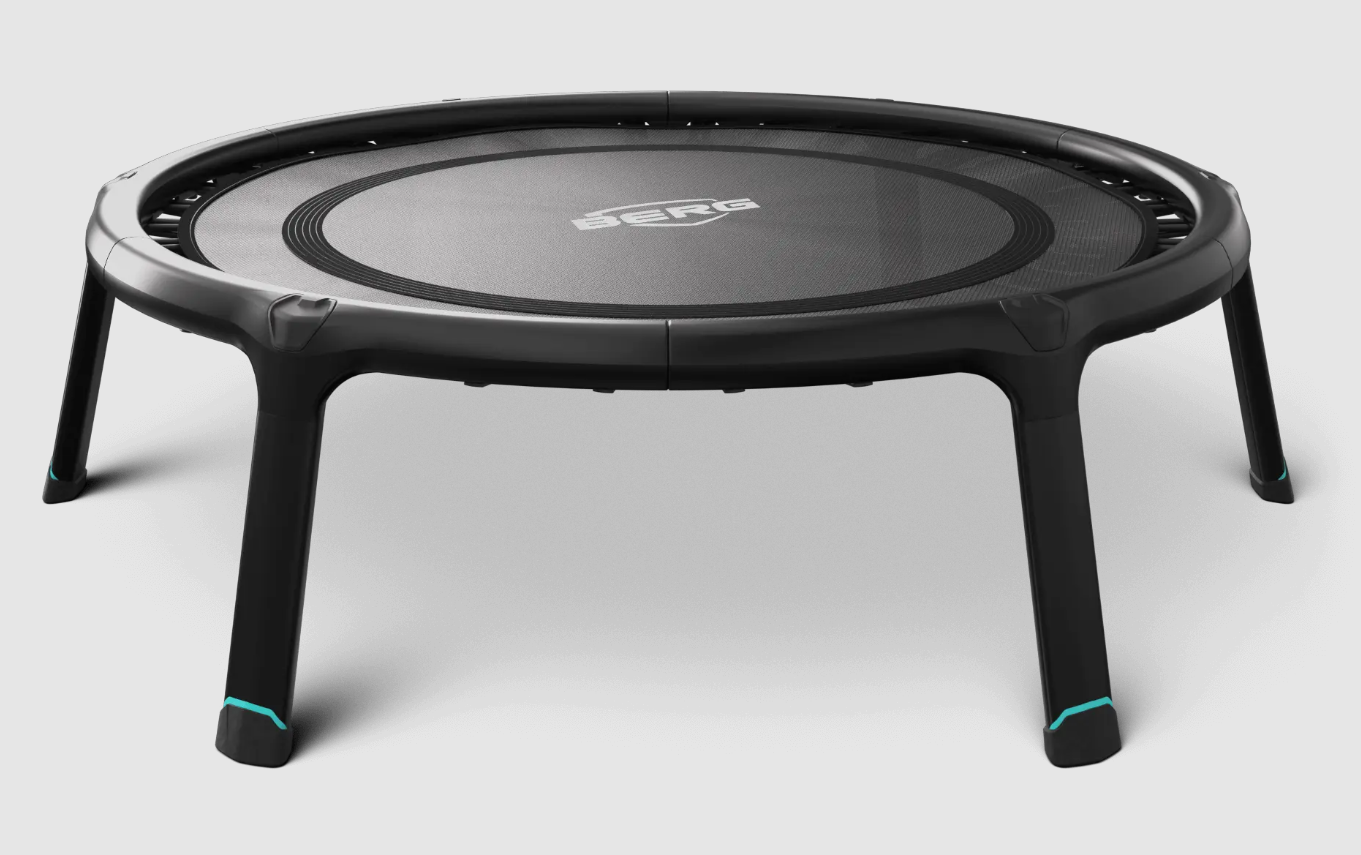
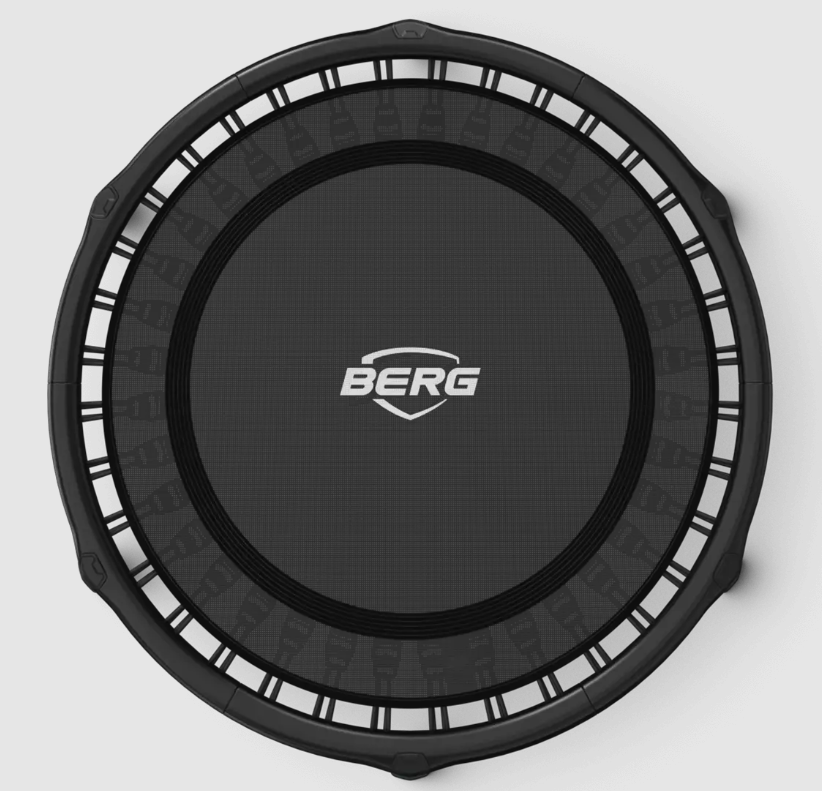
The BERG Fitness Trampoline 110 uses 36 elastic bands rather than metal springs. Its bounce is quiet and smooth, which makes it an appealing option for controlled indoor exercise. A band-based system avoids the metal-spring connection used by spring designs, but it does not remove every possible source of sound. Foot placement, movement and the building beneath you still matter.
Do not interpret a smooth bounce as permission to ignore discomfort or technique. Start with small movements and learn how the surface responds. If possible, experiencing a rebounder before committing can help you understand your preferences. Without a trial, ask specific questions about intended use and support rather than expecting a description to predict exactly how it will feel to you.
What to know about springs
Metal springs are a conventional suspension approach, not a reason by themselves to call a rebounder dangerous. A well-maintained product used within its instructions should be judged on its own design and condition. Different spring products can vary, just as elastic-band products can. Avoid comparisons that treat every model in either group as identical.
When considering a spring rebounder, read the assembly and inspection instructions, check user limits and ask how replacement components are sourced. Those are sensible questions for elastic-band equipment too. If a listing offers little beyond dramatic claims about bounce or calorie burning, seek the missing practical details before you buy. Suspension is only one part of the equipment you will rely on.
Noise: separate mechanism from floor transmission
A quiet bounce can be helpful in a shared home, but sound travels in more than one way. You may hear the mechanism, foot contact or movement transmitted through the floor. A rebounder described as quiet is not a guarantee that a downstairs neighbour will hear nothing, particularly in a building with lightweight floors.
Choose a level, stable position and check how the equipment behaves during gentle movement. Ask someone in the adjoining room, or a neighbour where practical, what they can hear. Exercise at considerate times and reduce the force of your movement before assuming an accessory will solve everything. A soft or unstable base is not a sensible trade for a lower noise level.
Bounce feel is personal, not a score
Some people prefer a softer-feeling response; others want a firmer sensation. Descriptions such as smooth or responsive are helpful starting points, but they are not standardised ratings. We do not publish invented bounce scores or claim a universal optimum. What matters is whether you can move comfortably, control your position and stop without feeling rushed.
Your starting routine matters too. Gentle presses with feet on the mat are different from rapid footwork or higher bouncing. Compare equipment against the movements you actually plan to use, not the most dramatic routine in a video. If you are unsure, keep the initial goal modest and choose support based on your confidence rather than a performance label.
Maintenance is part of either choice
Any rebounder needs checking. Inspect the mat, connections, frame, legs and any stability bar before use, following the manufacturer’s instructions. Look for changes from the normal condition rather than relying on a fixed replacement date taken from an unrelated product. Stop using equipment that appears damaged or unstable and seek guidance before continuing.
Do not add lubricants, cleaners or improvised parts simply because an online tip recommends them for another suspension system. Material compatibility and correct assembly matter. Ask the seller about approved replacement components and the appropriate procedure for your model. Replacing something under tension can require care; guessing the method is not a good way to extend the life of your equipment.
Compare the whole rebounder
For the BERG 110, the verified details include a magnesium frame, aluminium legs with anti-slip caps and foldable legs for storage. Its diameter is 110 cm (43 in), its height on legs is 30 cm (12 in), and the maximum user weight is 120 kg (approx. 19 st). It is for indoor use and ages 14 and over.
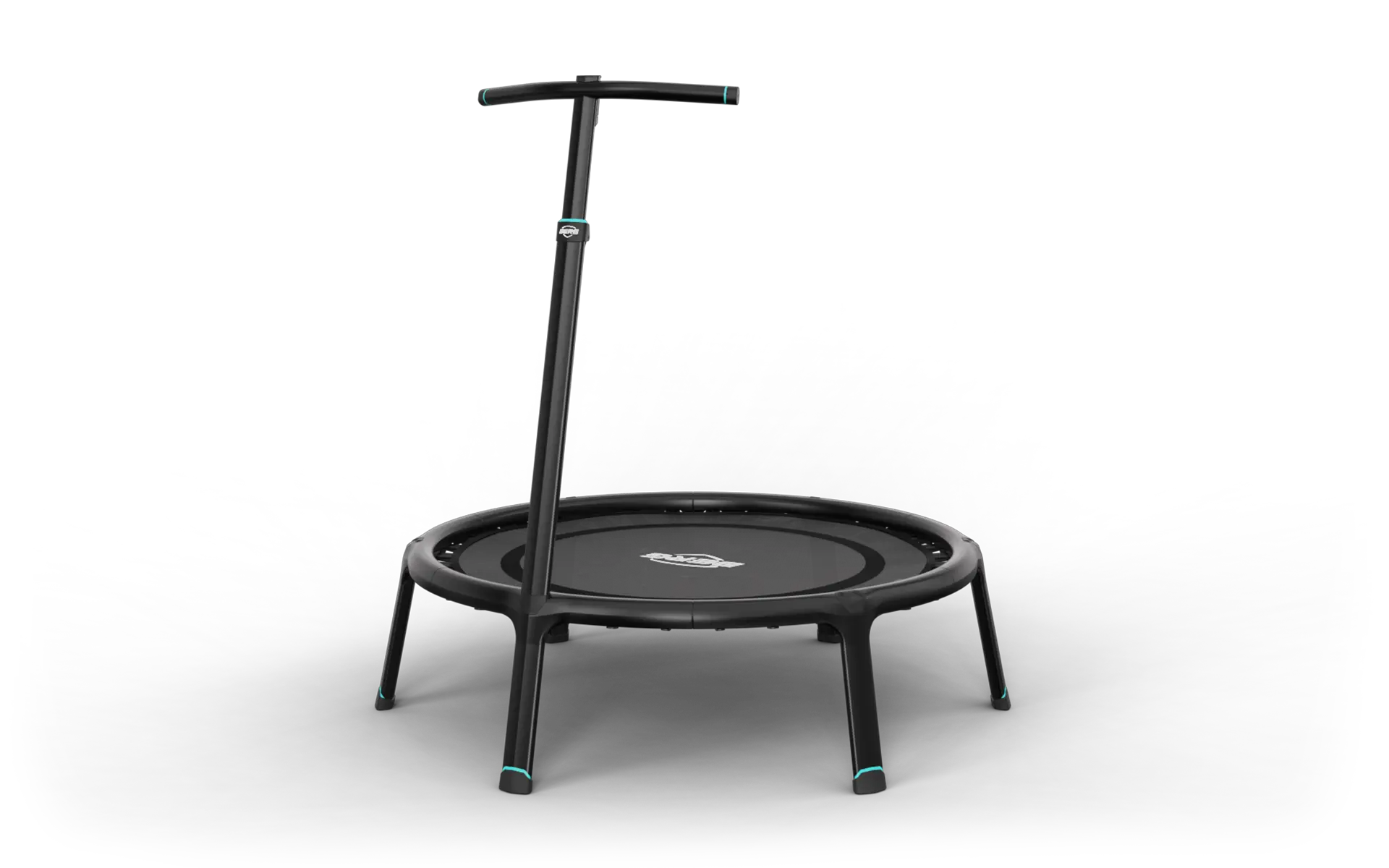
Those details are more actionable than declaring a suspension type the winner. Measure your room, check headroom and decide whether a stability bar would help you. If storage is tight, confirm the relevant dimensions before ordering; do not assume that foldable means it will fit a particular gap. Compare clear product information, not assumptions based on photographs.
Make a decision you can explain
List your three main needs. For example, you might want a quiet indoor routine, a support bar and a practical storage arrangement. Then check how a complete product addresses each need, including any unanswered questions. If the bounce system sounds appealing but the user limit or intended location is wrong, it is not the right purchase.
The BERG elastic-band design is a straightforward choice for people attracted to its smooth, quiet bounce and the option of a stability bar. That recommendation does not require dismissing springs. Buy on verified details, correct fit for your home and the availability of helpful advice. A realistic comparison leaves you knowing both what you are getting and what no seller can promise.
Find the right BERG setup
Compare both BERG rebounders before choosing. The BERG Fitness Trampoline 110 offers the clear-front setup, while the BERG 110 with Stability Bar adds a point of support. Read the product details, check your room and ask about anything that is unclear before ordering. The right choice is the version you can use comfortably and as intended, not the one associated with the most ambitious routine.
If you have a medical condition, speak to your GP or physiotherapist before starting. If you are pregnant, returning after injury or unsure whether this activity suits you, seek individual advice before starting. Stop if movement causes pain, dizziness or unusual breathlessness, and seek appropriate help for concerning symptoms.