Start with the flat, not the advert
The best rebounder for a flat is one that fits the actual room, supports the movement you want to do and can be used considerately. A compact photograph and the word quiet are not enough to answer those questions. Your floor construction, neighbours, storage arrangements and available headroom all influence whether the equipment will work well at home.
Walk through the space before ordering. Identify where the rebounder would stand during use and where it would live afterwards. Think about doors, shared walkways and whether you would have to rearrange the room every time. Convenience is not just a small diameter; it is being able to set up and finish without creating a daily obstacle course.
Understand quiet bounce versus silent building
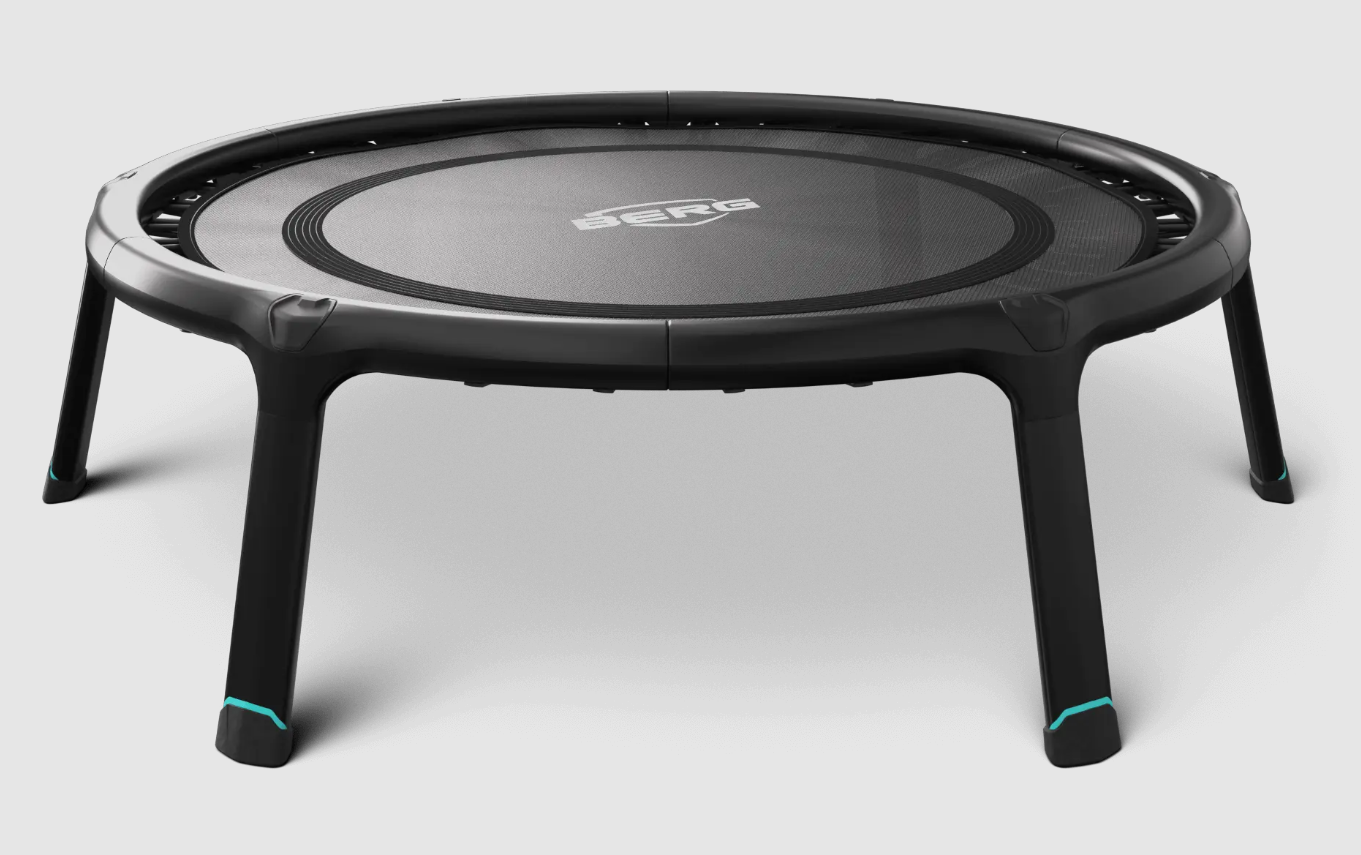
The BERG 110 uses 36 elastic bands for a quiet, smooth bounce without metal springs. That is a useful feature when choosing indoor exercise equipment. It does not mean every flat will remain silent during a session. Movement can travel through the floor even when the rebounder mechanism itself makes little sound.
A downstairs neighbour may notice transmitted vibration that you barely hear in your room. There is no honest universal promise about how much sound a particular building will carry. If noise sensitivity is a major concern, think about your exercise timing and movement style before buying. Do not rely on a product description to overrule what you know about thin floors or existing neighbour concerns.
Choose the floor position carefully
Use a level, stable surface and make sure the equipment sits correctly as instructed. The BERG has aluminium legs with anti-slip caps, but those caps do not remove the need to assess your floor. Keep the area dry and clear of loose rugs, cables and anything that could shift under or around the legs.
Do not place the rebounder on a bed, sofa cushion or unstable stack of mats to reduce sound. If you are considering floor protection, ask about a compatible option that preserves stability rather than assuming any soft material is suitable. Where there are concerns about the building or floor structure, seek appropriate advice; a retailer’s general guide cannot assess the construction of your home.
Measure more than the diameter
The BERG 110 has a diameter of 110 cm (43 in) and stands 30 cm (12 in) high on its legs. Marking that footprint can help you visualise its position, but you still need surrounding space to move and step off. Keep away from furniture edges, radiators, glass and routes that another person needs to use.
Check overhead clearance for your own height while standing on the mat and for the movements you intend to make. Pendant lights, beams and ceiling fans need attention as well as the ceiling surface. There is no single safe ceiling height for every person and routine. If you feel tempted to crouch around an obstacle, change location rather than adapting your posture to a cramped setup.
Be precise about folding and storage
Foldable legs can make storage more practical, but the word foldable does not tell you an exact stored size. The BERG has foldable legs; follow the supplied instructions for their use. We do not publish an unverified folded height or claim it will slide under every bed or sofa. Confirm the details if a particular gap is essential.
Measure the route to storage as well as the storage space itself. Consider doors, corners and whether you can move the equipment comfortably without dragging or dropping it. A stability bar may affect the storage process, so ask about that version specifically. Store the rebounder somewhere dry and secure, where it will not fall into a walkway or be used unexpectedly.
Decide whether you want a bar
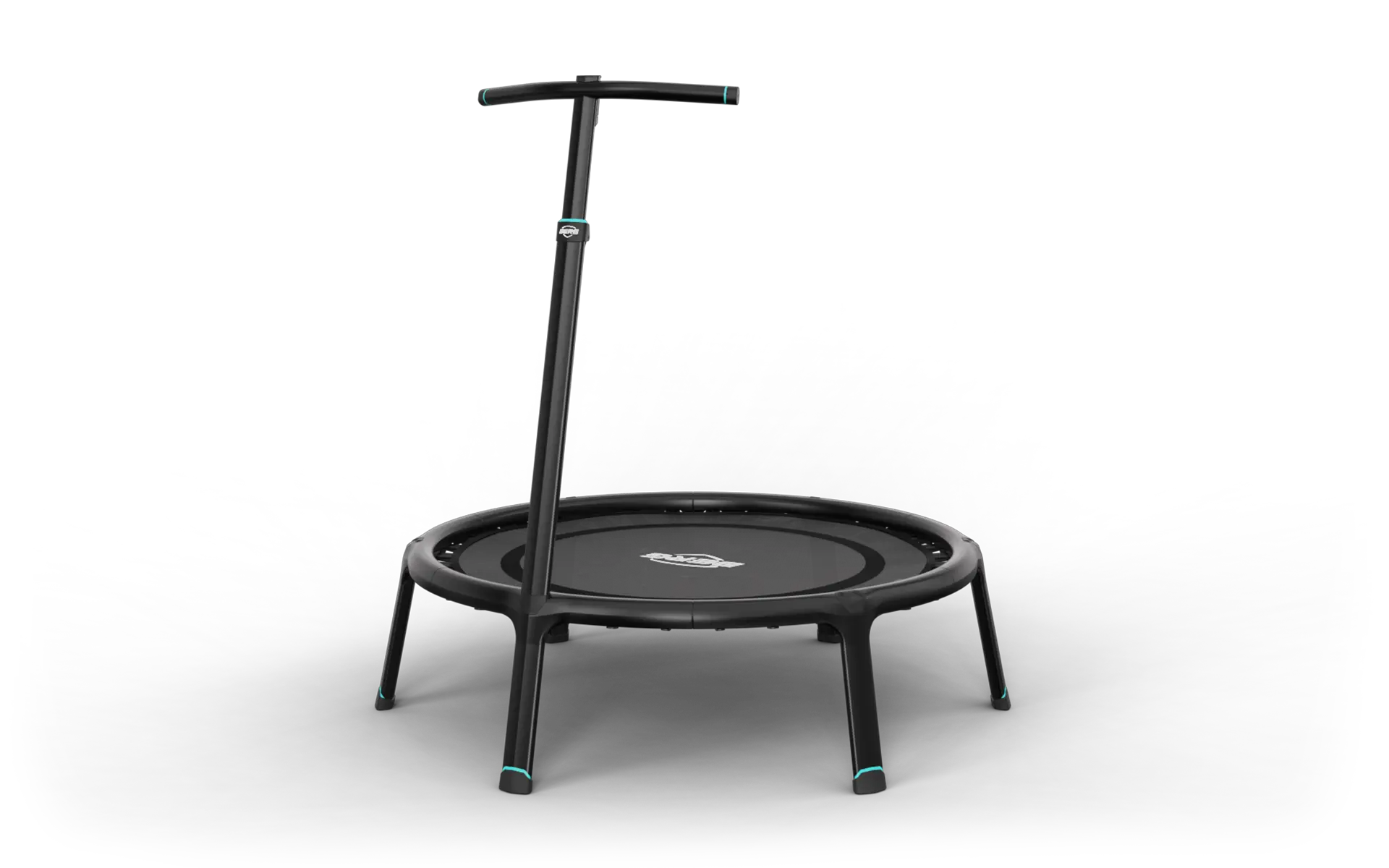
A stability bar is worth considering if you are new to rebounding or would feel more confident with a point of support. Limited space should not pressure you into choosing the version without support if that does not suit your needs. Equally, a bar is not necessary merely because your home is a flat.
Think about how you will use the equipment, not just where it will stand. If you need advice about balance or a medical condition, get that advice before deciding. The bar must be assembled and used as directed, and it does not make a cramped or obstructed exercise area acceptable. Check your practical requirements against the complete product, including the version you actually intend to buy.
Plan a considerate routine
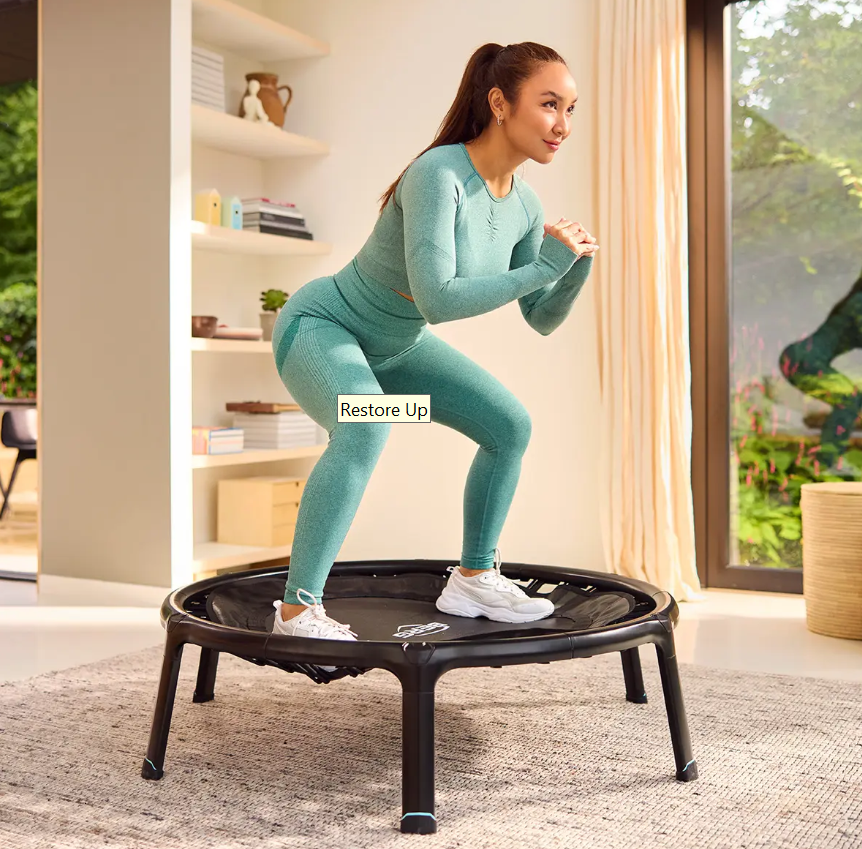
Low, controlled movement is a sensible starting point in a shared building. Gentle presses and measured marching let you become familiar with the mat without beginning with energetic jumps. Try a brief session at a reasonable time and ask what can be heard in an adjacent room or below, where practical. Feedback is more informative than assuming quiet means inaudible.
Avoid early-morning or late-night sessions if they are likely to disturb others, and agree workable times where you can. If floor transmission remains intrusive, change the location or choose a different activity. Considerate use is part of deciding whether the rebounder suits your home. No accessory or bounce technique can be promised to solve every acoustic problem in every flat.
A realistic shortlist of requirements
For the BERG 110, check that indoor use, the age rating of 14 and over and the maximum user weight of 120 kg (approx. 19 st) suit the intended user. It has no safety net and a three-year home-use warranty. Its quiet elastic-band system and foldable legs are useful features, but suitability still depends on your space and circumstances.
Before ordering, you should know where it will be used, how you will check clearance, where it will be stored and when you can exercise considerately. If any of those answers depends on an unknown measurement, ask first. The best purchase for a flat is not necessarily the smallest-looking rebounder; it is the one you can use properly without compromising stability, support or your relationship with neighbours.
Find the right BERG setup
Compare both BERG rebounders before choosing. The BERG Fitness Trampoline 110 offers the clear-front setup, while the BERG 110 with Stability Bar adds a point of support. Read the product details, check your room and ask about anything that is unclear before ordering. The right choice is the version you can use comfortably and as intended, not the one associated with the most ambitious routine.
If you have a medical condition, speak to your GP or physiotherapist before starting. If you are pregnant, returning after injury or unsure whether this activity suits you, seek individual advice before starting. Stop if movement causes pain, dizziness or unusual breathlessness, and seek appropriate help for concerning symptoms.